The one declaration on this shelf that is a decision
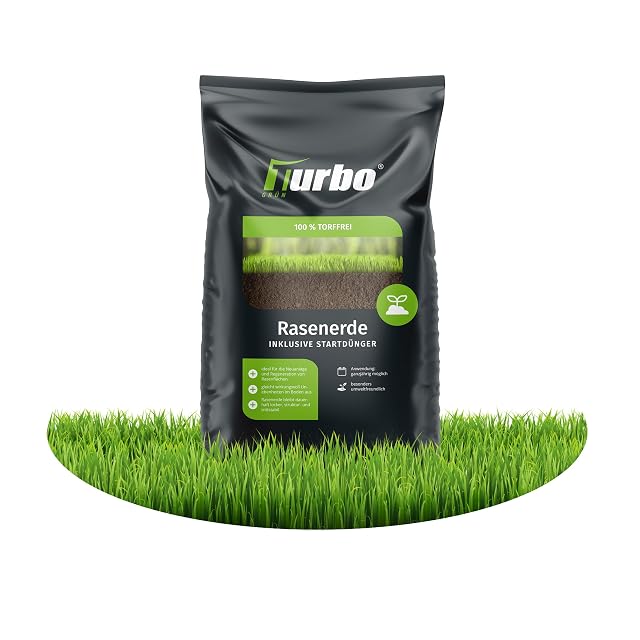
100 % peat-free.
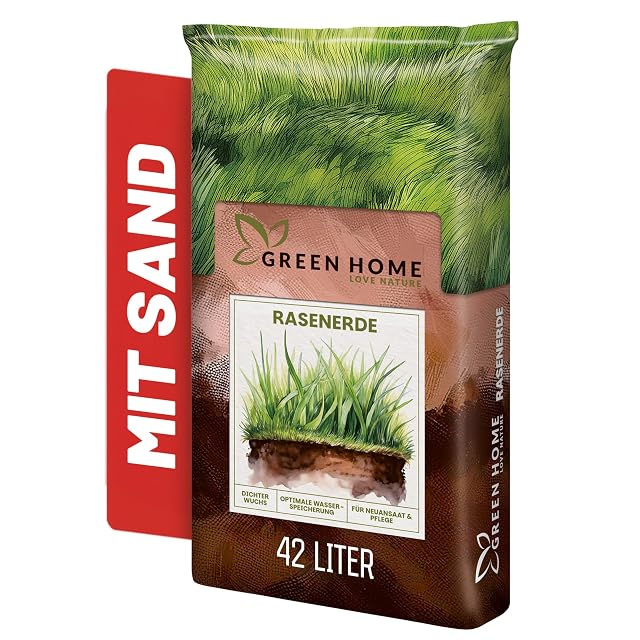
Another substrate here names white peat as its first ingredient. The other two
publish nothing at all about their composition — one has a single feature line
reading “gardener quality!” and the other’s two lines are both the brand name.
So of four substrates, one says it contains peat, one says it contains none, and
two leave the buyer to guess.
Why peat is the issue it is
Peat is an outstanding growing medium. It holds an enormous amount of water,
it is structurally stable, it is consistent from bag to bag, and it is naturally
low in nutrients so a manufacturer can add exactly what it wants.
That is precisely the problem: it works so well that it has been extracted at
scale.
Peat forms in waterlogged bogs at something like a millimetre a year. A metre of
peat is a thousand years of accumulation, and the carbon in it has been out of the
atmosphere for that long. Cutting and drying it releases that carbon, and the bog
— which is a habitat with species found nowhere else — does not come back on any
timescale a person can think about.
Peat-free substrates replace it with wood fibre, coir and composted
bark. The listing here says natural biological ingredients without itemising
them.
What changes in use, honestly
Peat-free lawn substrate works. There are two real differences and neither is a
reason to avoid it.
It consumes nitrogen. Wood fibre decomposing in soil is broken down by microbes
that need nitrogen to do it, and they take it from the surroundings — so a fresh
wood-fibre mix can leave less nitrogen available than a peat mix would. That is
part of the reason a starter fertiliser is included, and every peat-free
substrate worth buying has one.
It dries at the surface faster. Peat holds water tenaciously; wood fibre drains
more freely. For a sown patch that is the one thing to watch, because this site’s
lawn seed shelf is unambiguous about it: germinating seed must not dry out, not
once, and a seedbed that dries at midday on day four has lost the seed that had
already started.
A peat-free seedbed in June wants checking daily.
The quartz sand, already in the mix
“Fine quartz sand additionally provides better drainage.”
That is a sensible inclusion and it is worth connecting to the other half of this
shelf.
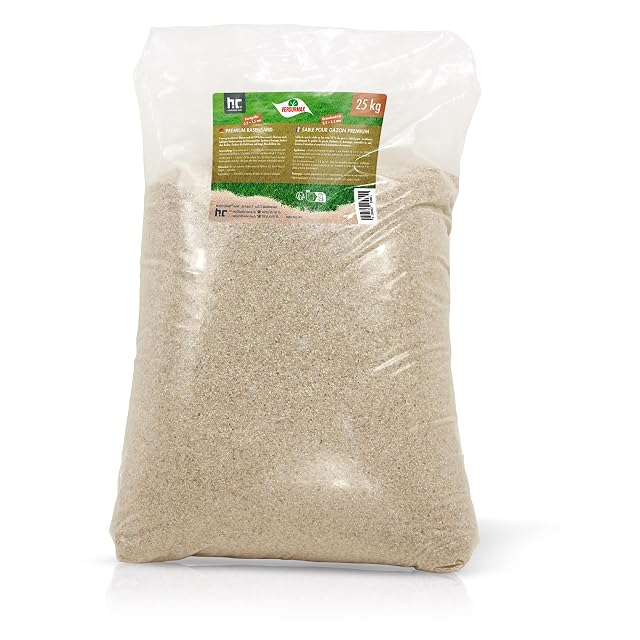
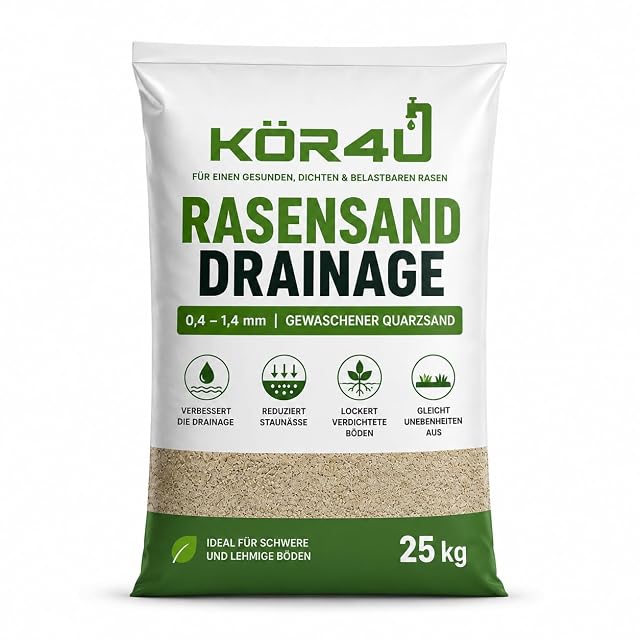
Three products here are lawn sand sold by the 25 kg sack, and two of them
publish a grade: 0.4 to 1.4 mm and 0.3 to 1.5 mm. Those grades exist
because drainage depends on coarse grains leaving large pores, and fine
particles fill pores rather than opening them.
This listing says fine quartz sand.
In a substrate that is a different job from top dressing. Here the sand is adding
weight, resisting compaction and keeping an organic mix from slumping — it is not
being brushed into aeration holes to make drainage channels through a clay pan.
For that job, the graded sands on this shelf are the product, and they work when
applied straight after aerating.
90 litres in three bags
The largest quantity on this shelf, and the sensible packaging for it.
Thirty litres of moist substrate is a bag one person carries. Ninety in one sack
would be a wheelbarrow job, and the two competing multi-packs here are 2 × 40 L
and a single 45 L.
Three bags also means two can stay sealed while the first is used. Open substrate
dries out, and a peat-free mix dries faster than a peat one.
The delivery note
“When ordering several bags, delivery by the shipping service may take place on
several days.”
Worth flagging because it is a real inconvenience on a job that has a sequence.
Overseeding a lawn means scarifying, sowing and dressing in one weekend, and a
substrate that arrives in instalments does not fit that.
It is honest of the listing to say so, and nothing else on this shelf mentions
it.
The price, stated plainly
About 0.63 € per litre, against roughly 0.37 €, 0.40 € and 0.41 € for the three
other substrates here.
That is over half again the cheapest, and about 0.23 € a litre more than the
mid-priced bags — one of which declares white peat as its first ingredient.
On a 90 litre job the difference is real money, and it is buying an environmental
decision rather than a performance one. This page states the size of it and leaves
the decision where it belongs.
What goes unpublished
No pH. No fertiliser analysis.
One substrate on this shelf publishes pH 6.0 and an NP 23-14 starter feed.
Grass does best between roughly pH 6.0 and 6.5, and a peat-free mix’s pH depends
heavily on what replaced the peat — composted bark and green compost tend to run
higher than peat does.
“Starter fertiliser” with no analysis is the same gap the fertiliser shelf on this
site has: five of seven feeds there describe potassium at length without saying how
much is in the bag.
No rate and no depth. Only one product on this whole shelf publishes a rate,
and it is a rock powder at 250 g/m².
What the listing claims about children and pets
The listing declares the substrate harmless for children and pets, without
qualifying the claim. This page reports that it was declared, and stops there.
What can be said accurately: this is a substrate with a fertiliser in it. There is
no pesticide, no biocide and no herbicide — which is a real distinction from this
site’s moss killer shelf, where one product is a plant protection product requiring
the lawn to be out of use for two to three days.
A starter fertiliser is still a concentrated salt, and the label on the bag is the
authority, not a feature line.
Availability
Around 57 €, read at the German Amazon store on the day of the survey.
Nothing came back from the American, British, French, Italian and Spanish Amazon stores at all; the buy button there runs a search rather than opening an empty page.
Taken from Keepa on the day this page was last revised; stock and prices move without notice.
Prices quoted in this text were read on 26 September 2026. The live price is at the top of the page.