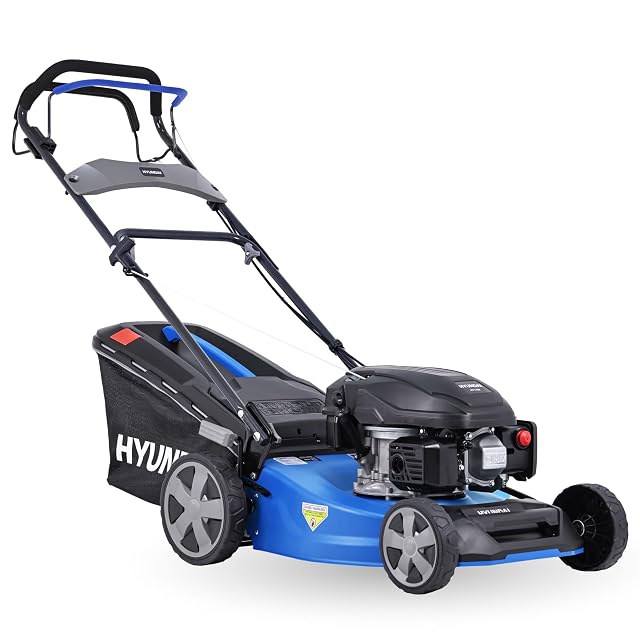
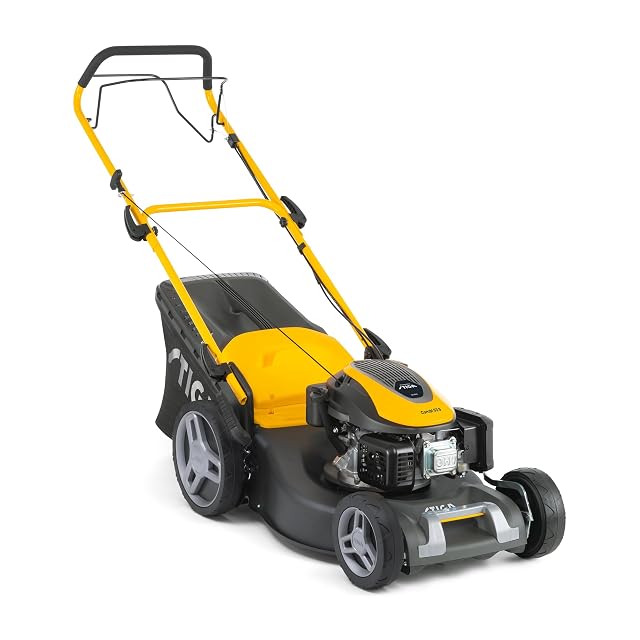
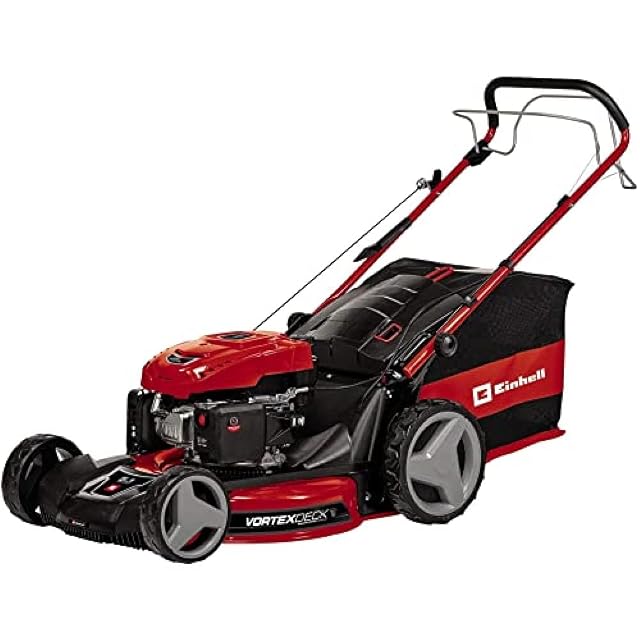
Width, engine, and whether the wheels drive themselves
The best petrol mowers for 2026
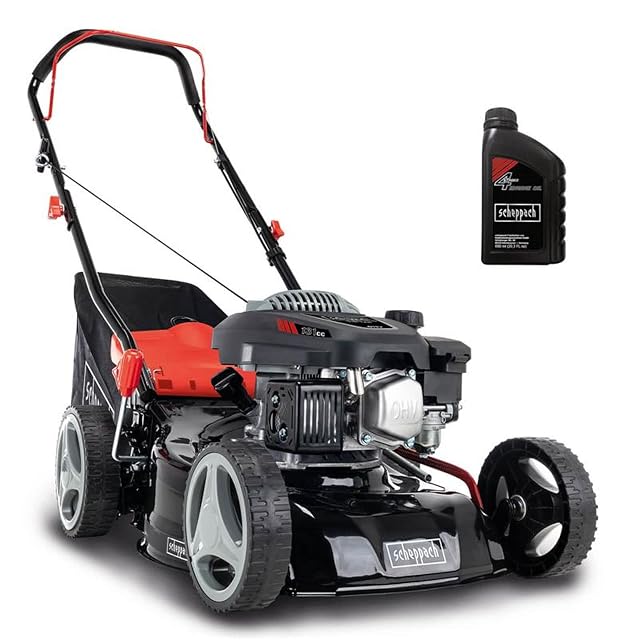
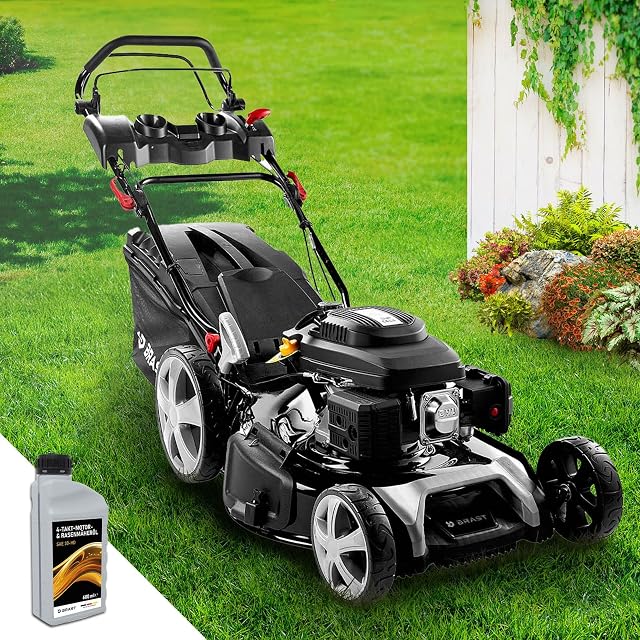
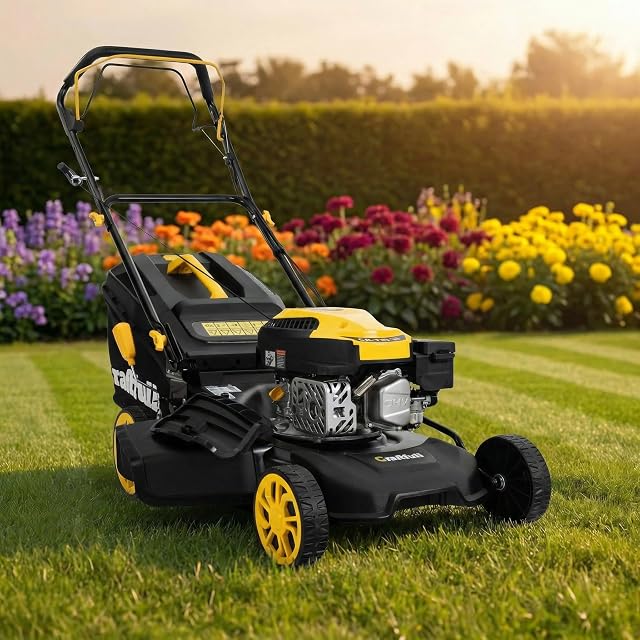
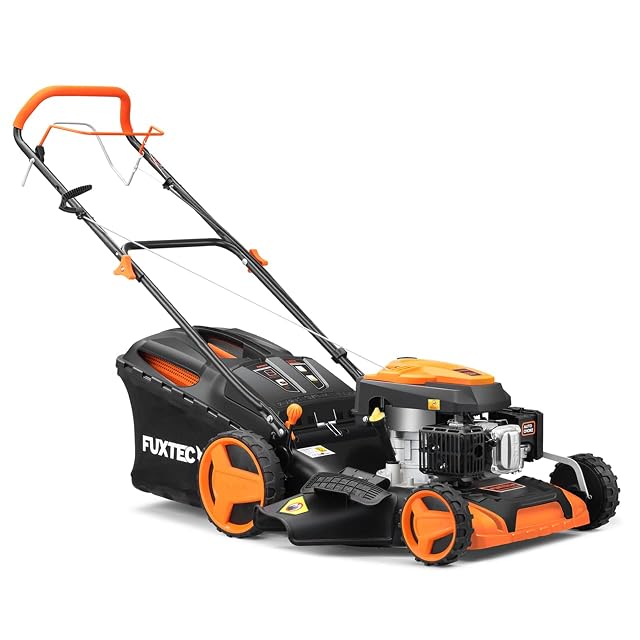
A petrol mower is the machine you buy when the lawn is too big for a cable and too big for one battery charge, and the shelf splits on three things. The cutting width comes first, because it is the only figure that changes how long the job takes in a way that is not an assumption: 42, 46, 51, 53 and 55 cm are the sizes this catalogue found, and every ten centimetres is roughly one pass fewer across a lawn. The engine is quoted three ways on the same shelf — in horsepower, in kilowatts, or in cubic centimetres of displacement — and the three are not interchangeable: 3,3 PS, 5,2 kW and 196 ccm all appear in titles here, describing machines that are not comparable on the number alone. What matters more than the figure is whether the mower is self-propelled. A 53 cm machine with a full catcher weighs enough that pushing it up a slope is the whole difficulty of the afternoon, and « mit Antrieb » in a German title is the word that decides it. Then the ordinary things that decide whether the mower is pleasant: the cutting heights, usually a single central lever with five to seven steps; the catcher volume, 45 to 60 litres, which sets how often you stop; and the functions, sold as 3-in-1 or 5-in-1 — mow, collect, mulch, side-discharge, and sometimes a rear discharge. A petrol mower also publishes a guaranteed noise figure, because the European noise directive requires it to be marked on the machine, and it is the one number on this shelf that has a legal definition behind it. We compare cutting width, engine, displacement, cutting heights, catcher volume, drive, functions, guaranteed noise and weight.