The coating decides the job, and the size decides everything
Garden gloves, compared
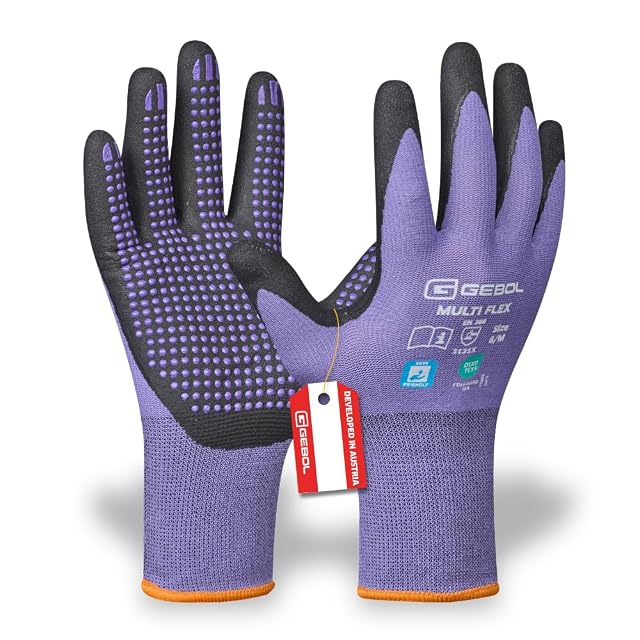
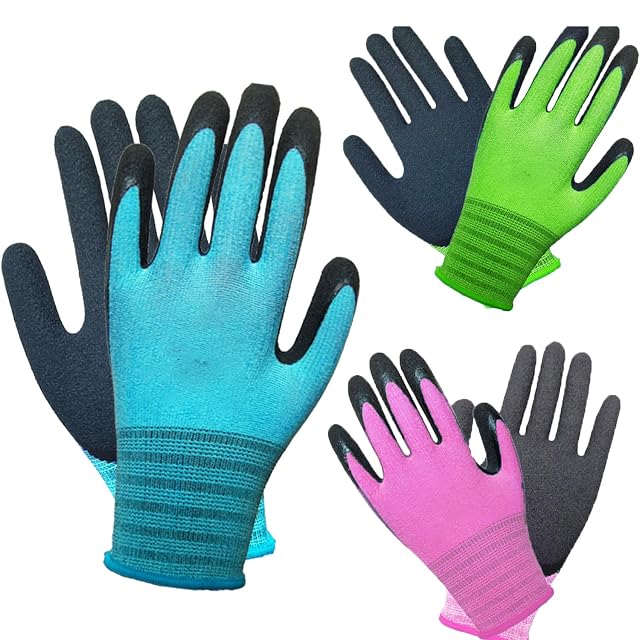
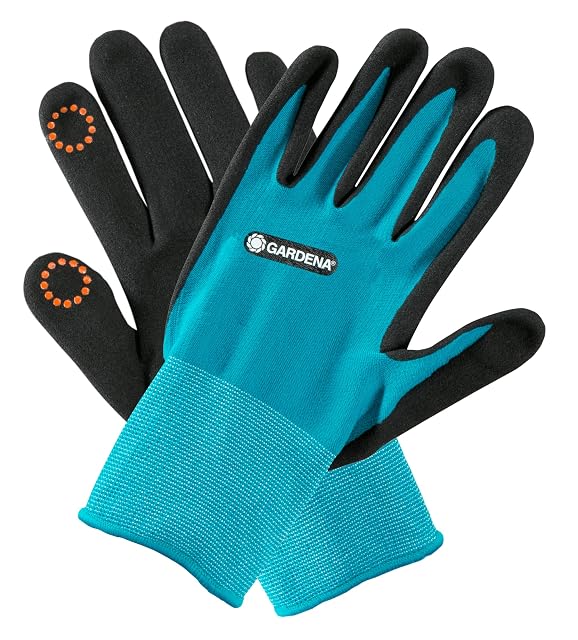
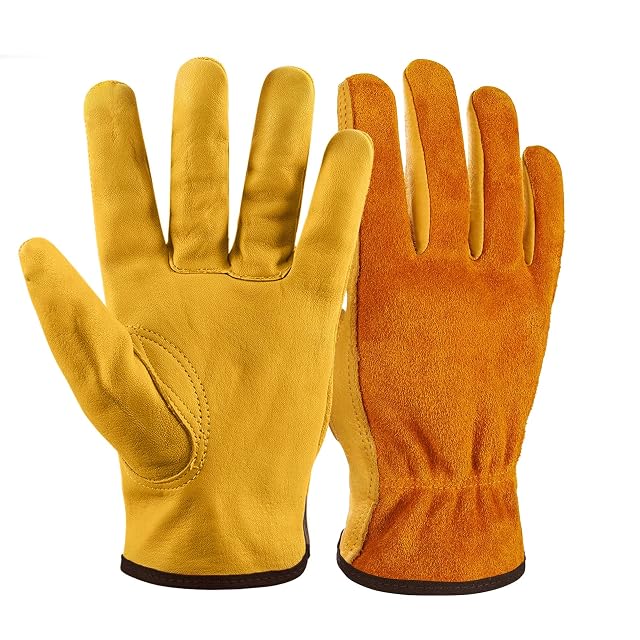
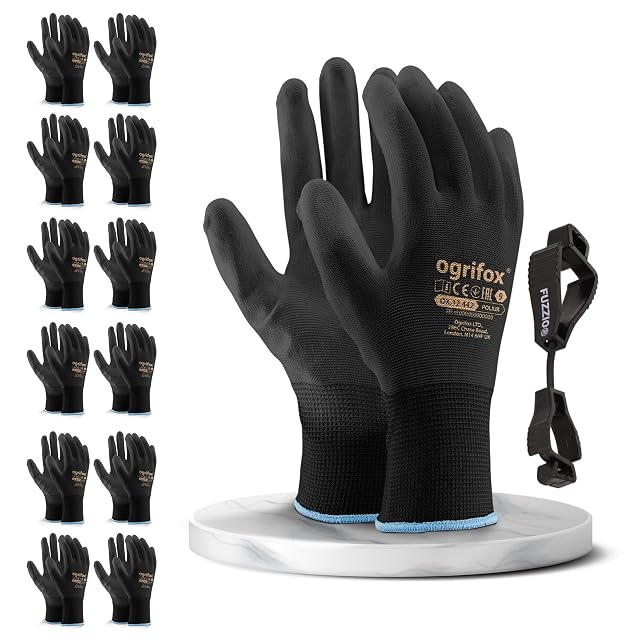
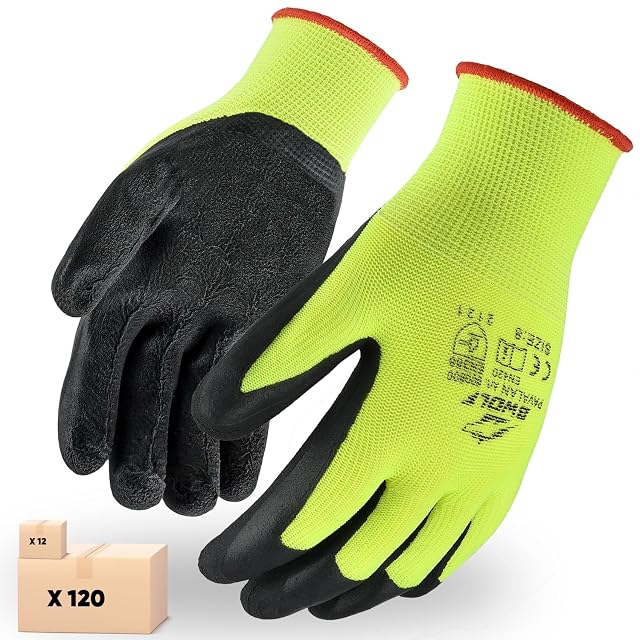
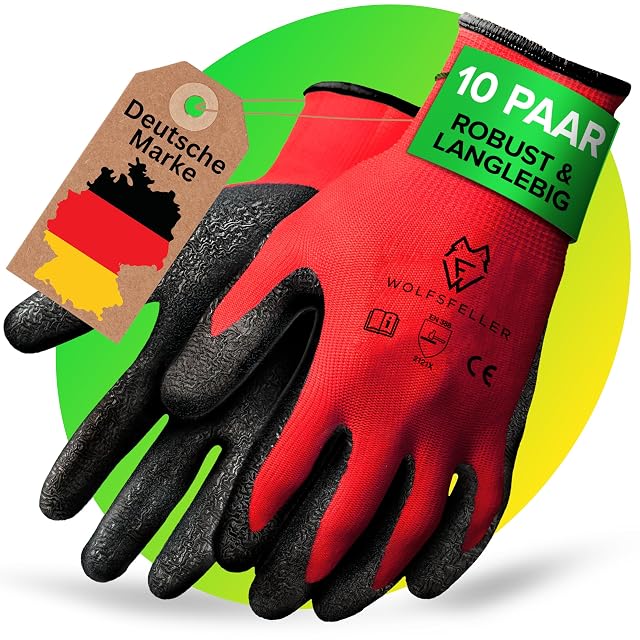
Garden gloves are cheap, bought in multipacks, and chosen almost entirely by the coating on the palm — which is the part of the specification most listings bury. A nitrile-dipped palm on a knitted shell grips wet tools, keeps soil out and breathes on the back of the hand: it is the everyday gardening glove and what most of this corpus sells, often ten or twelve pairs at a time. A full leather glove protects against thorns and rough timber and is useless in the wet. A coated rubber gauntlet handles chemicals and keeps hands dry, and no lawn job needs one except spraying. The material of the shell — polyester, nylon, cotton — decides comfort rather than protection, and the gauge of the knit decides dexterity: a 13-gauge glove lets you pick up a screw, a heavy one does not. The sizes column matters more on this shelf than anywhere else on the site, because a glove that is too big is more dangerous than no glove near rotating machinery and a glove that is too small is taken off after ten minutes. Sizes here run 7 to 11 or S to XXL, and the multipacks are usually one size. The cuff is knitted, elasticated or a gauntlet, and it decides whether soil goes down the wrist. And the standard: gloves sold as protective equipment carry a European standard number and a set of performance digits for abrasion, cut, tear and puncture. A pair that publishes them is making a checkable claim; a pair that does not is a garden glove, which is usually all a lawn needs. We compare sizes, material, coating, cuff and standard.