A probe that reads a colour, or a chemical test that reads a number
Soil testers, compared
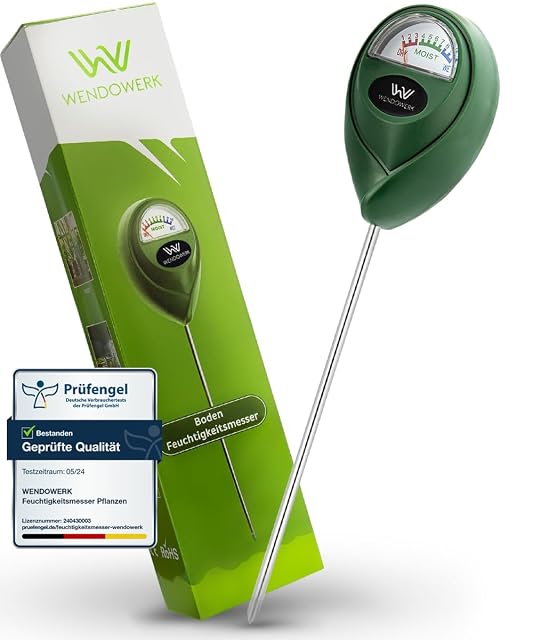
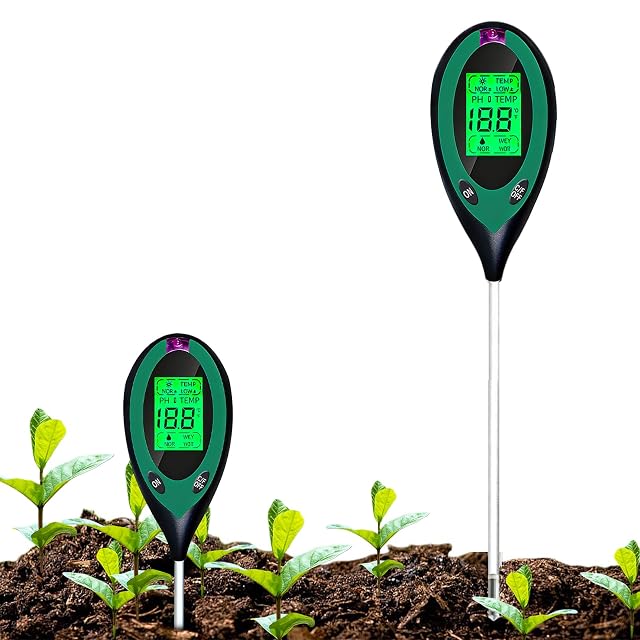
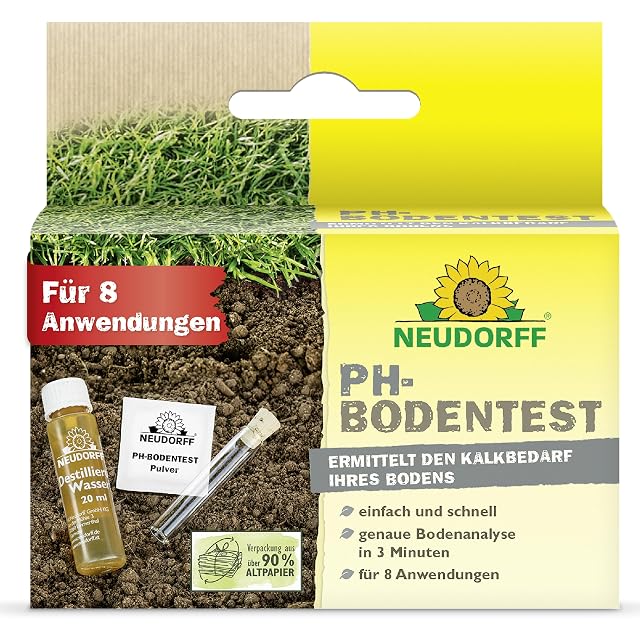
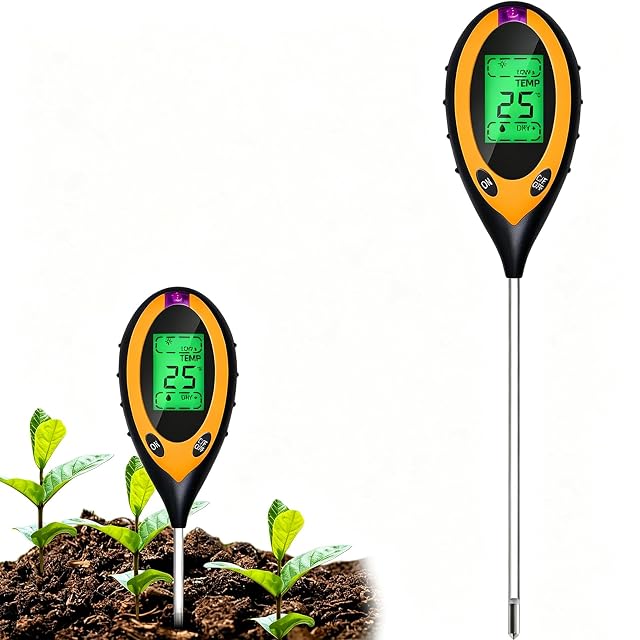
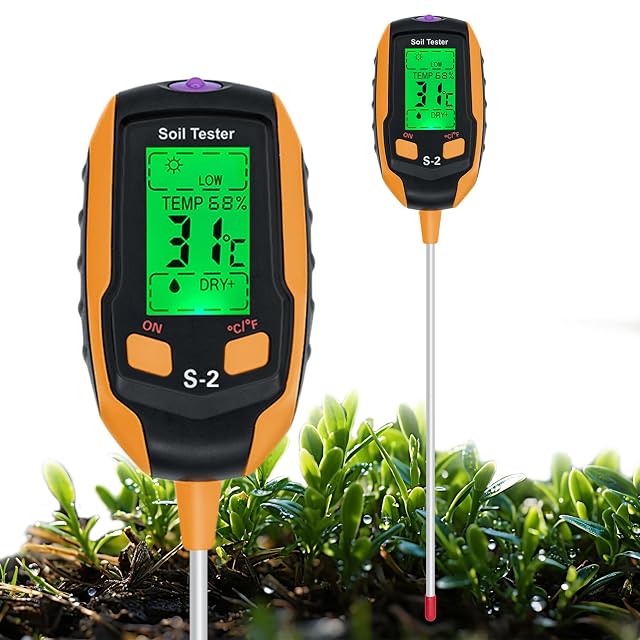
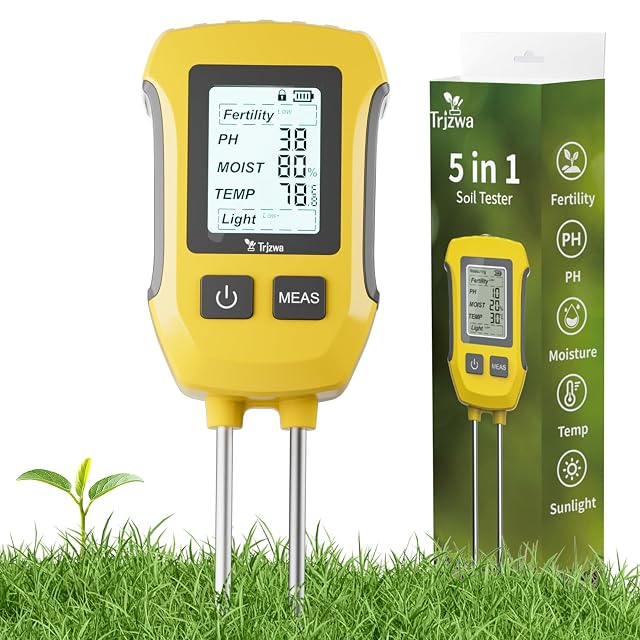
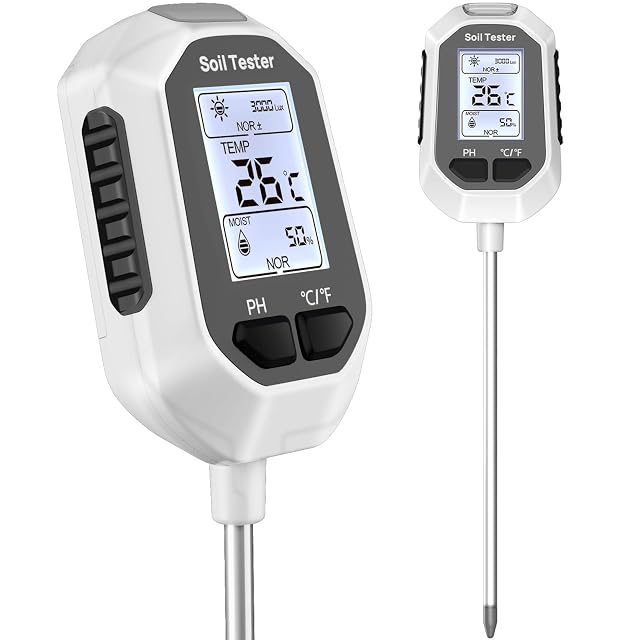
A soil tester answers one of two quite different questions, and the shelf mixes them. The cheap analogue probes — two metal pins, a dial, no battery, and a three-in-one or four-in-one claim covering moisture, pH, light and sometimes fertility — read an electrical property of the soil and translate it onto a coloured scale. They are useful for one thing, which is telling you whether a spot is dry or wet, and their pH reading is indicative at best: no battery-free probe measures pH by any chemistry, and the honest way to describe them is as a comparative instrument. The chemical test kits on the same shelf do measure pH: a soil sample is shaken with a reagent and the colour is compared to a card, in eight or twelve applications per box, and the result is a number that can be acted on. The measures column says which of the two a listing is, and it is the most important column on this shelf. The readout follows — a needle, a colour card, or an LCD on the digital meters — and the power, where « ohne Batterien » is advertised as a feature and is really a consequence of what the instrument does. The probe length and material decide whether it reaches the root zone and whether it corrodes. The use limits are published by nearly all of these — soil only, never liquids, and never forced into dry ground — and they are the part of the sheet that decides whether a reading means anything. Read against a lawn, the point of this family is narrow and real: it tells you whether an acid soil is the reason the moss keeps coming back. We compare measures, readout, probe, power and use limits.