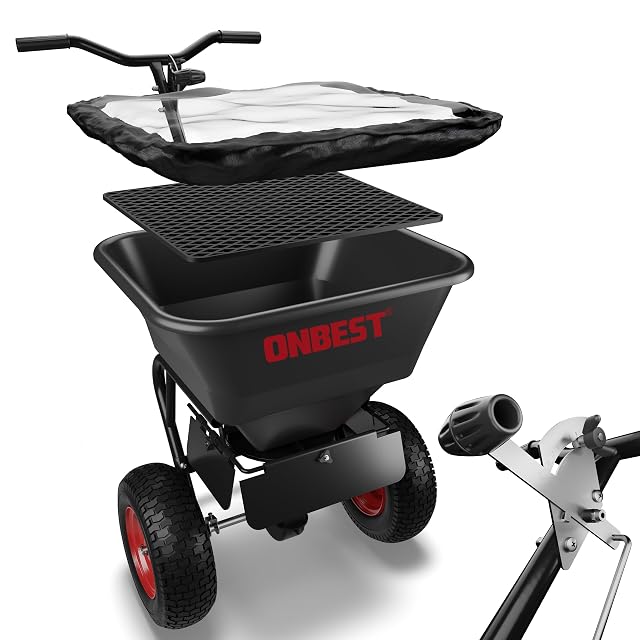
Forty-five litres
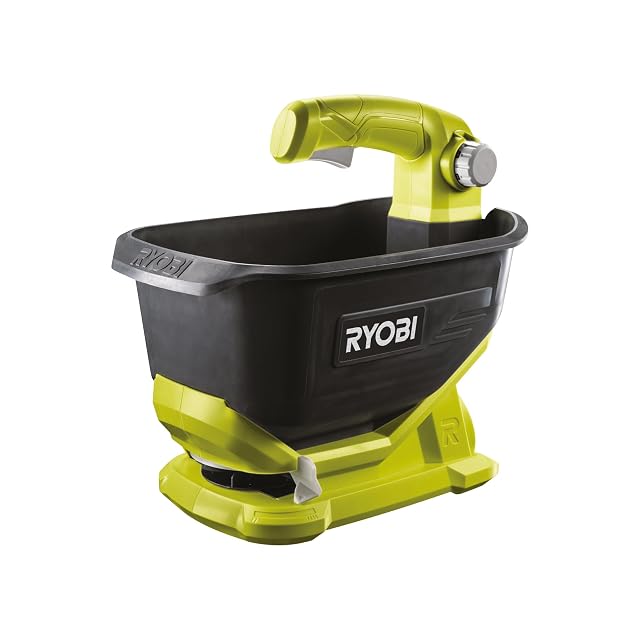
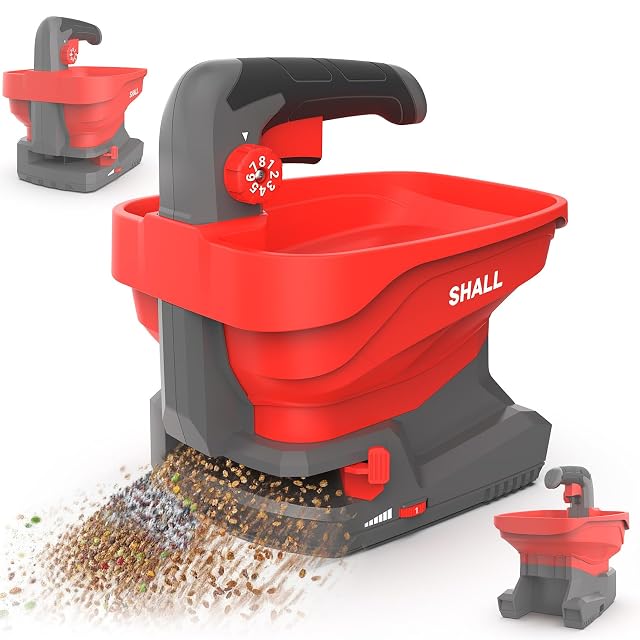
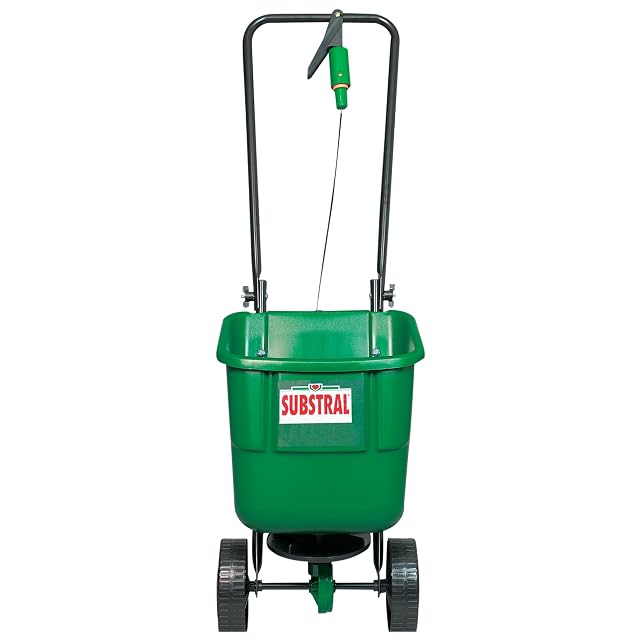
Three times the next largest hopper on this shelf, which holds 15. The handheld
spreaders here hold 3.3 and 4.
That is roughly 50 kilograms of granular fertiliser when full, and the whole
design follows from it.
Which is why it has a steel frame and air-filled tyres
Both named, and neither is decoration.
A steel frame. Every other wheeled spreader here is plastic, and plastic is
adequate at 12 or 15 litres. At 45, the hopper load goes through the frame every
time the machine is pushed, pulled, turned or lifted over a step, and a moulded
plastic chassis under 50 kg racks.
Large pneumatic tyres. This is the more practical of the two.
Fifty kilograms on hard plastic wheels does two things on a lawn: it digs in, and
it skids when the grass is wet. Both leave marks, and a spreader that skids stops
turning its disc evenly — so the rate changes with the traction.
Air-filled tyres spread the load over a longer contact patch, roll over a lawn
edge instead of stopping at it, and keep turning on wet grass. On the biggest
machine here they are what makes it usable rather than merely large.
The agitator, which is the best feature in this listing
Named as a stirrer in the hopper, and it addresses the failure mode that
actually stops spreaders working.
Granular fertiliser is a salt. It draws moisture out of the air, and damp
granules stick to each other.
A caked mass in a hopper bridges: it arches over the outlet and supports
itself, and nothing comes out. The spreader keeps rolling, the disc keeps
spinning, and the lawn gets nothing — for however long it takes you to notice.
Then the arch collapses and dumps a kilo in one place.
On a 45 litre hopper that is not a small risk. There is a great deal of weight
pressing the mass together, and the bottom of the hopper is a long way from the
top.
An agitator turning with the wheels keeps the material above the outlet moving,
so it cannot arch. One other spreader on this shelf warns about jamming and tells
you how to clear it; this is the only one with a mechanism to prevent it.
The lever at the handlebar
The metering control, on the handle where it can be reached while walking.
That is the right place, and for the same reason a stop bar matters on the
smaller rotary spreader here: a broadcast machine that keeps delivering while you
stand still puts a heavy dose in one spot, and you stand still at the end of
every run.
With 45 litres above the outlet, a stationary dose is a large one.
What goes unpublished, and it is the important gap
No spread width.
On a broadcast spreader that is the specification. The others on this shelf
publish 2 m per side, 2.5 to 3.5 m, and up to 5 m.
Width is what you plan passes with, and it is what decides the overlap — and
overlap is where broadcast spreading goes wrong. A cone is denser in the middle
than at the edges, so passes have to be lapped by roughly the right amount, or
the lawn shows pale strips where neither pass reached full rate and dark strips
where two stacked.
With no width figure, the first pass is guesswork.
No rates either. The lever is adjustable and nothing says what any position
delivers, or what suits grass seed against lawn feed against de-icing grit.
And what it is genuinely for
Not a suburban back lawn.
Forty-five litres, a steel frame and pneumatic tyres describe a machine for a
large area worked in one go: an orchard, a paddock, a long drive to be gritted, a
sports pitch, several hundred square metres of lawn at once.
For 200 m² twice a year it is a great deal of spreader, and it will spend most of
its life taking up shed space. The 12 and 15 litre machines here are the domestic
answer.
The one rule this machine makes hardest to break
Empty it and rinse it, every time.
Forty-five litres of caked fertiliser or road salt left over a winter is not a
cleaning job, it is a chisel. A steel frame under it is the part that rusts.
Availability
Around 160 €, read at the German Amazon store on the day of the survey.
Listed and unsold: the British Amazon catalogue holds the reference with nobody behind it.
Nothing came back from the American, French, Italian and Spanish Amazon stores at all; the buy button there runs a search rather than opening an empty page.
Taken from Keepa on the day this page was last revised; stock and prices move without notice.
Prices quoted in this text were read on 26 September 2026. The live price is at the top of the page.