What this shelf is actually made of
Seven products, and the first thing to establish is how many of them are tools.
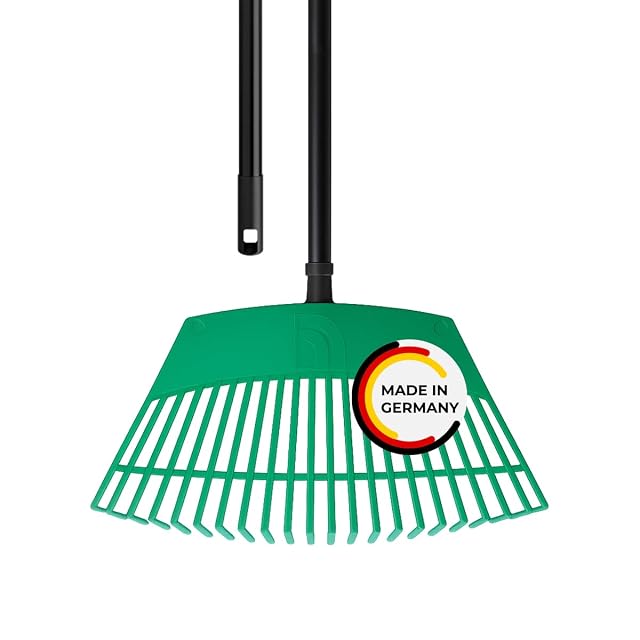
Two are complete, with a handle. This is one of them.
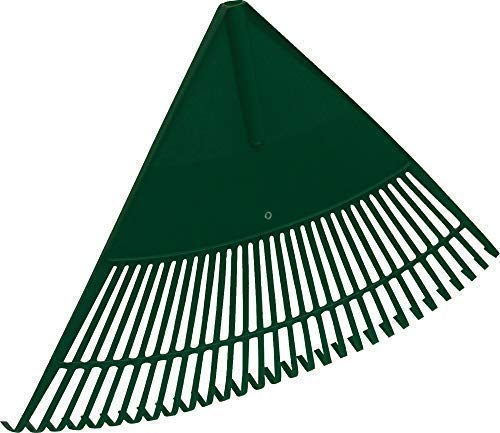
Five are heads only. Two of those publish a socket diameter — 30 mm and 26 mm —
which is the only figure that tells you whether a handle from a shed will fit. One
requires a specific handle from the same maker, and states that it is not compatible
with that maker’s own other system.
So of seven products on one shelf, two work out of the box, two can be matched to a
handle by measurement, and three cannot be matched from what is published.
And then this listing publishes nothing measurable
No working width. No tine count. No tine material. No weight. No
handle length.
Five feature lines, and the closest any of them comes to a specification is “elastic
tines” and “low weight”.
Which matters most on the width
The working widths on this shelf run 30 cm to 78 cm — a factor of more than two —
and one rake is adjustable between 30 and 50.
That range is not a detail. Raking leaves off a lawn is a job measured in passes, and a
78 cm head covers well over twice the ground per pull of a 30 cm one.
It also cuts the other way, which is why the adjustable one exists: a wide head cannot
get between shrubs, along a fence line or under a hedge, and it loads every tine at once
in heavy wet leaves.
Without a width figure, nothing about how this rake will work can be established.
What a fan rake does, and what it does not
Worth setting out, because this site has two shelves that look similar.
A fan or leaf rake — this — has long tines splayed into a fan, each one springy.
Under load they flex, so the head rides over the sward and lifts loose material off
the top of it: leaves, clippings, twigs, pine needles.
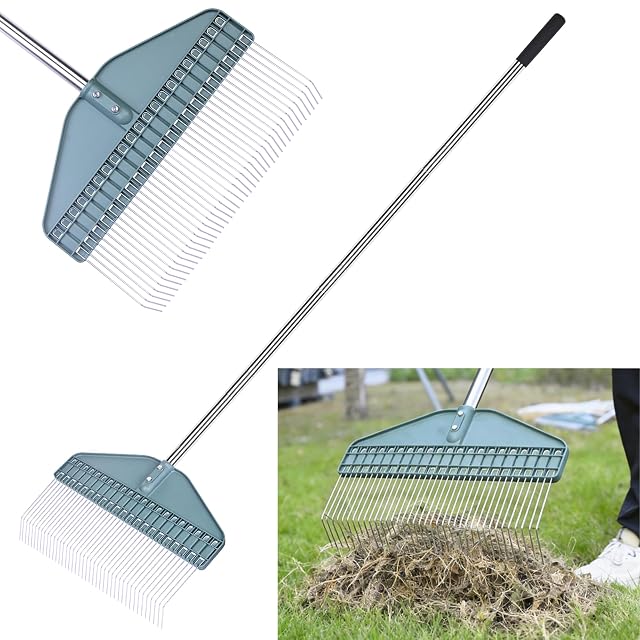
A soil rake has short rigid steel tines at right angles to a bar. It moves soil and
it would destroy a lawn.
A dethatching rake looks like a fan rake and is not one. Its tines are stiffer,
shorter and set much closer together, often with a hooked profile, and the point is to
dig into the mat of dead material between the green grass and the soil and drag it
out.
This site’s aerator shelf carries one of those, and it publishes 21 pairs of spring
steel tines across a 43.2 cm head.
The two jobs are different, they are done at different times of year, and a rake that is
good at one is poor at the other. Nothing in this listing says which spacing it has,
though “elastic tines” that “adapt to the surface” and are “gentle on lawns” points
clearly at leaves.
The tine material, which is the other unstated fork
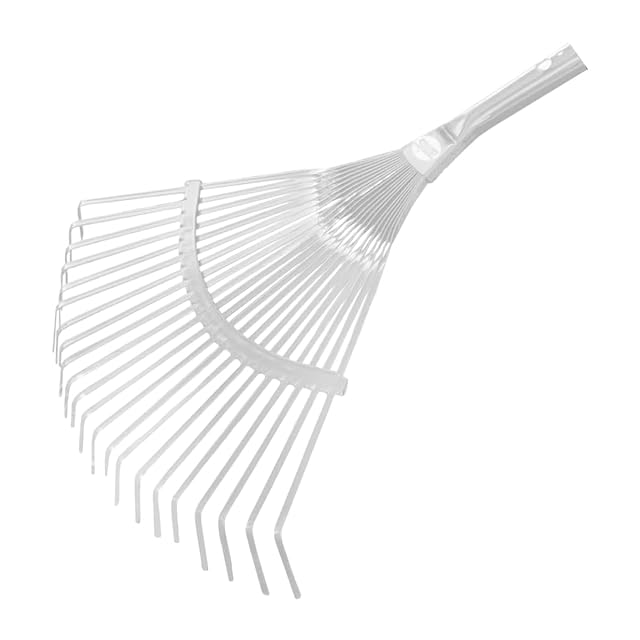
Four rakes on this shelf have plastic tines, one has flat galvanised steel, one
spring steel, and this one does not say.
The difference is real:
Plastic is gentle. It flexes rather than digging, it will not tear the crowns out of
a lawn, and it is light. In heavy wet leaves it flexes too much — the tines bend
back and the leaves slide over the top.
Steel moves matted material. It also digs, and on a soft wet lawn a steel fan rake
pulled hard lifts grass with the leaves.
For dry autumn leaves on a lawn, plastic is the better tool. For a matted spring lawn,
steel is.
The fifth feature line
“Our philosophy: MADE IN GERMANY — since 1952! We produce our products in Germany and
they are already in nearly every household. Our products convince through their
everyday usability, their durability and their clear, considered design. We are proud,
as a family business on Lake Constance, to have created 300 jobs for people from the
region and we continue to invest in the future and sustainability.”
That is one of the five things the manufacturer chose to publish about the product, and
it contains nothing about it.
It is reported here because this page’s job is to describe what was published — and
because a shelf where one listing publishes a 61 cm width, a 41 cm length, a 26 mm
socket and a 0.36 kg weight, and another publishes a company history, is worth
describing accurately.
What can honestly be said for it
It is complete, it is cheap, and it is a fan rake, which is the right shape
for leaves on grass.
For a lot of people that is the whole purchase: something to pull leaves off a lawn in
November, from a shop, for under ten euros, with a handle already on it.
The rakes further up this shelf publish widths, tine counts, socket diameters and
weights — and two of them need a handle bought separately, which on the cheapest
head-only product roughly doubles the real price.
Availability
Around 10 €, read at the German Amazon store on the day of the survey.
Listed and unsold: the American, British, French, Italian and Spanish Amazon catalogues hold the reference with nobody behind it.
Taken from Keepa on the day this page was last revised; stock and prices move without notice.
Prices quoted in this text were read on 26 September 2026. The live price is at the top of the page.