The nozzle, which is the real specification
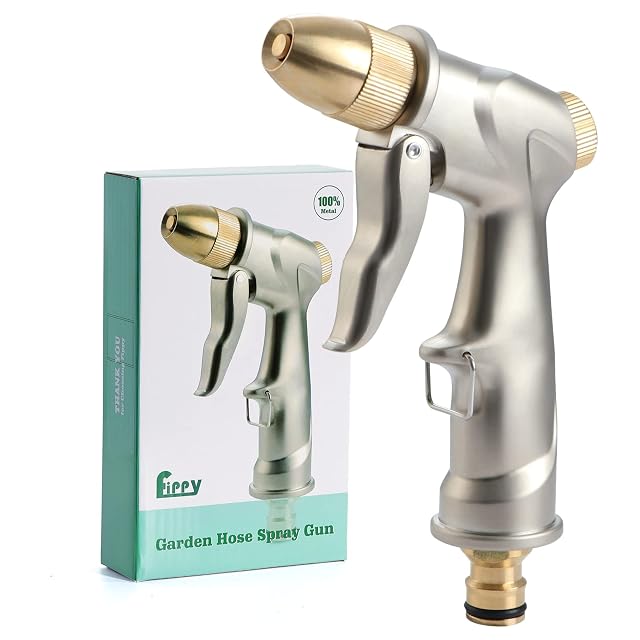
Solid brass, on a zinc alloy body.
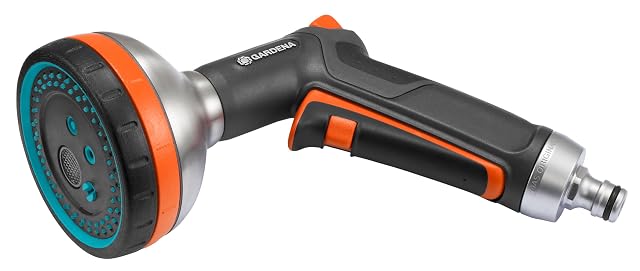
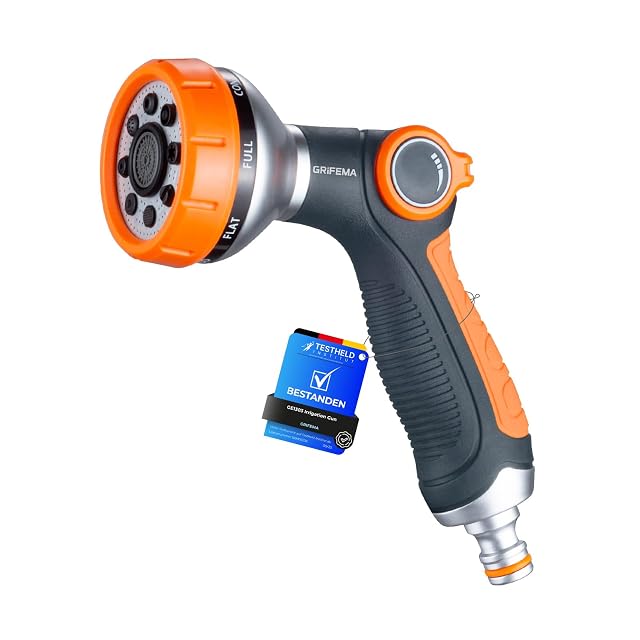
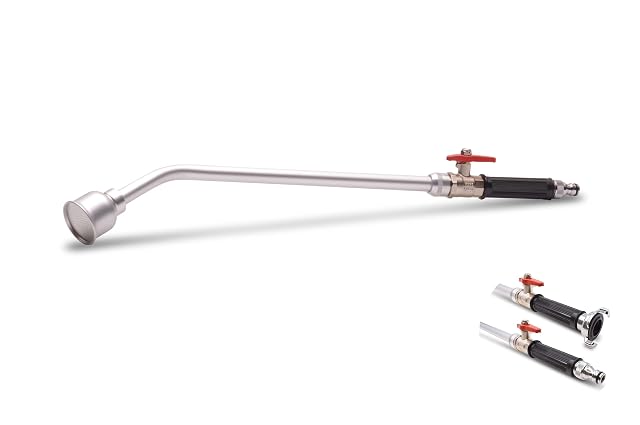
No other gun on this shelf says what its nozzle is made of. One says aluminium
alloy for the whole gun; four are plastic; one is an all-metal lance.
The distinction matters because of where a spray gun wears.
Water leaves a nozzle fast, and it carries grit — sand from the main, rust from
a tap, grit picked up when the hose end was dropped on gravel. That stream cuts
the orifice it passes through, slowly, and an eroded orifice turns a clean jet
into a fan.
Brass resists it. Aluminium alloy is softer. Plastic is softer still, which is
why a two-season-old cheap gun has a jet setting that no longer reaches.
Zinc alloy, and the honest cost
The body is zinc alloy and the listing says 100 % metal.
That buys everything metal buys: it does not go brittle in frost, does not go
chalky in UV, and survives being stepped on.
It costs weight. Zinc alloy is denser than aluminium and far denser than
ABS, and a spray gun is held out at arm’s length with the weight of a full hose
hanging off the back of it.
For twenty minutes of washing a car, weight is irrelevant. For an hour of
watering pots, the ABS guns on this shelf are genuinely easier, and this page
will not pretend metal is simply better.
The brass thread fitting
Named separately: a brass superfine-thread interface, one-piece, described as
sealing better.
That is the joint where guns weep, and the two failure modes are different:
A plastic collar on a metal fitting rounds off, and then it will not tighten
enough to seal.
A coarse thread seals on fewer turns and is more sensitive to grit in the
threads.
A one-piece brass fitting with a fine thread is the arrangement that lasts, and
it is the sort of detail that costs a few cents and decides whether the gun is
dry in three years.
Four patterns
Mist, moderate spray, jet, and an intermediate setting, by rotating the head.
Across this shelf the pattern counts sorted by price run 8, 8, 3, 4, 10, 5
and 1 — no relationship at all, on the number every listing advertises.
Four is towards the honest end. The three that get used on any gun are mist for
trays and seedlings, spray for watering, and jet for paving and wheel arches.
The sentence this shelf needed
From the listing, in its own words: the greatest water output of the nozzle
depends on your water pressure; if you have good water pressure, the nozzle
produces a very strong jet.
That is the only place on this shelf where a manufacturer says the obvious and
important thing.
A spray gun does not make pressure. It shapes whatever arrives. A gun advertised
as high pressure at the end of twenty-five metres of half-inch hose, from a tap
at two bar, shared with a shower upstairs, will not produce a hard jet — and no
feature on the gun can change that.
Every other listing here implies the opposite by calling itself a high-pressure
nozzle. This one names the condition.
The buckle trigger
Described as a force-saving buckle design, so the gun does not tire the hand
over long use.
It is a trigger, and it has to be held. Two guns on this shelf avoid holding
altogether with a twist control; one has a proper continuous lock.
A better-shaped trigger is a real improvement over a bad one and it is not the
same thing as not holding it at all.
Availability
From 15 € to 23 €, that being the spread across the German, French, Italian and Spanish Amazon stores on the day of the survey.
Beyond the euro zone, the British Amazon store prices it in its own currency, which the spread above sets aside.
Nothing came back from the American Amazon store at all; the buy button there runs a search rather than opening an empty page.
Taken from Keepa on the day this page was last revised; stock and prices move without notice.
Prices quoted in this text were read on 26 September 2026. The live price is at the top of the page.