Skip to content

ECOVACS GOAT O600 RTK vs WORX Landroid Vision WR206E.1

Which wire-free 600 m² robot tells you where it can work?

Both of these mow without a perimeter wire, and both are rated by their makers for 600 square metres. One navigates by satellite positioning backed up by vision, the other by camera alone. And one publishes the two figures that decide whether a robot suits a particular garden at all.

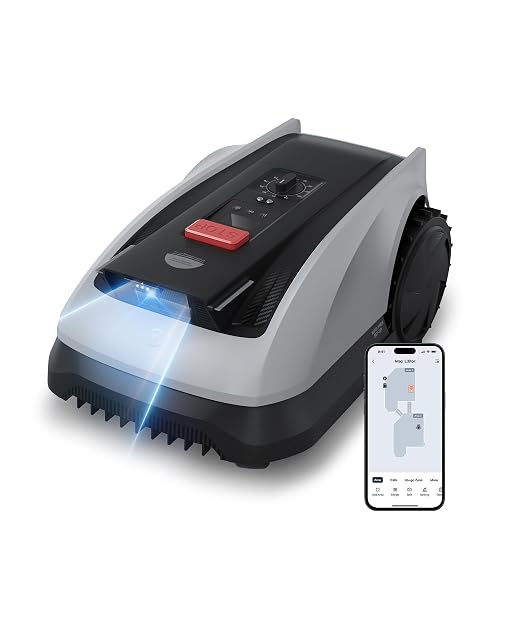
ECOVACS GOAT O600 RTK robot lawnmower with satellite navigation and an AI camera

ECOVACS GOAT O600 RTK

Wins 3 of 7

Check price

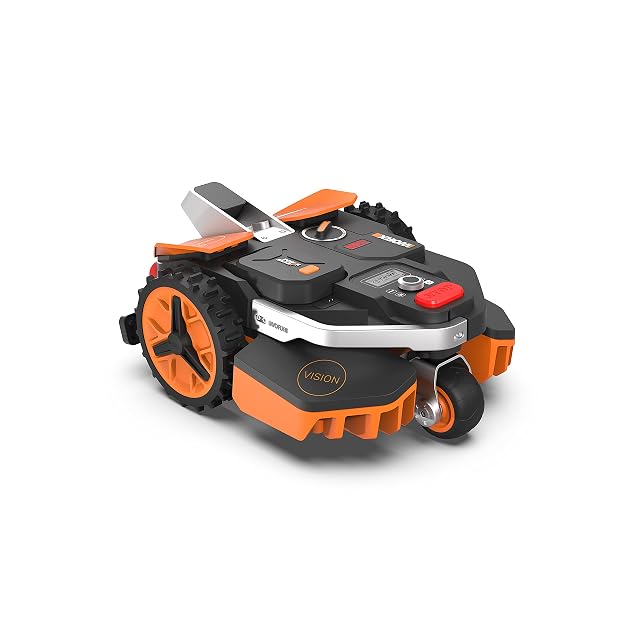
WORX Landroid Vision WR206E.1 robot lawnmower with a full-HD camera and charging station

WORX Landroid Vision WR206E.1

Wins 1 of 7

Check price

Line by line

Compared on GOAT O600 RTK Landroid Vision WR206E.1
Stated area 600 m² 600 m²
Navigation RTK satellite with visual positioning in weak signal, plus an AI camera Full-HD vision with on-board AI, updated over the air
Boundary None — detected and stored automatically, editable in the app None — no wire, no beacons, no antennas
Slope Up to 45 %, 3 cm obstacle clearance Not published
Cutting heights 30–80 mm in 10 mm steps Not published
Cutting width Not published Not published
Battery and charge time Not published Not published

A tick means one listing published something the other did not, or published a better figure. It does not mean the product is better, and the column is not a score out of anything: a maker who says less loses lines here without losing a comparison. The two verdicts below are where the page is settled.

Which one, for whom

Buy the ECOVACS GOAT O600 RTK

ECOVACS publishes the slope limit and the cutting-height range, and those are the two questions a robot buyer actually has: will it work on my bank, and can I set the grass at the height I want it. It also publishes a 3 cm obstacle clearance, which is what decides whether a lawn edge or a root stops it.

Buy the WORX Landroid Vision WR206E.1

WORX needs no antenna at all — no wire, no beacons, no satellite mast — which is a genuine simplification, because an RTK system depends on a reference station with a clear view of the sky and a garden with mature trees may not offer one. Its vision model is stated to update over the air, which is the only claim on this shelf about a machine getting better after purchase.

What this pairing usually raises next

Is "not published" a defeat?

On this site, yes, when the other product publishes. These pages compare declared characteristics, and an unknown value cannot beat a known one. Where both are silent — cutting width and battery here — the row is a tie, and that says something true about the shelf.

Does RTK or vision navigate better?

They fail differently. Satellite positioning is precise in the open and loses accuracy under a canopy or against a wall, which is why this listing pairs it with a visual fallback. Vision works anywhere there is light and depends on recognising what it sees. Neither listing publishes a mapping accuracy figure.

Why does the slope figure matter so much?

Because it is the commonest reason a robot mower is returned. A 45 per cent slope is about 24 degrees, and a bank steeper than the stated figure means wheels that spin, a mower that beaches, and a strip of lawn that never gets cut. One of these two publishes a number.

The full reviews

The live figure beside a product went and asked the shop for it the moment this page opened; any amount written into the text has not moved since the sentence was drafted, and it is the first of the two that counts.