What a soaker hose is
Not a drip system.
A drip system is tubing with individual emitters, each metering water to one
plant. A soaker — sold here as a perl hose or a drip hose — is a porous
tube that weeps along its entire length. You lay it down a bed and everything
along the line gets watered.
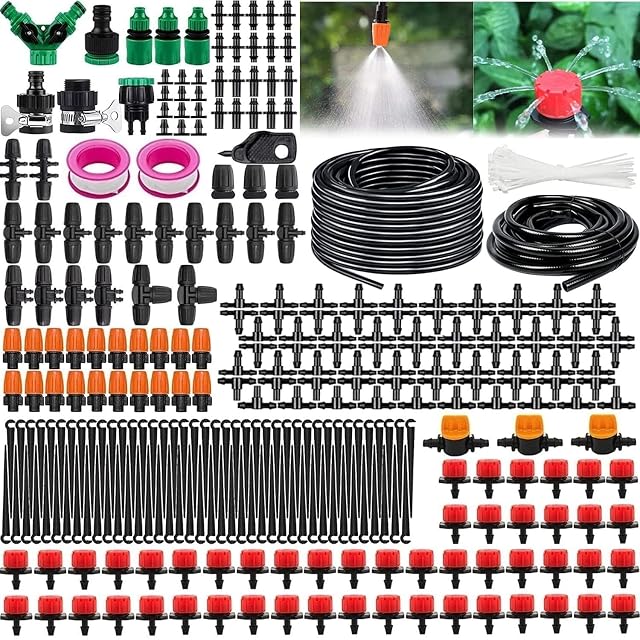
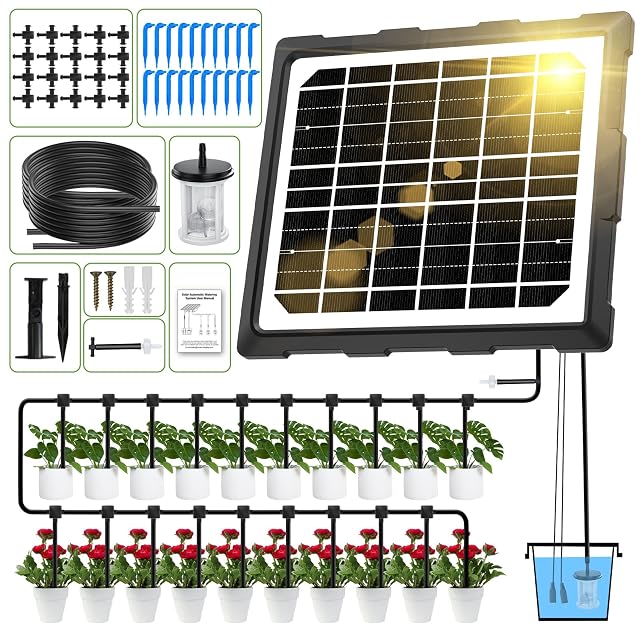
Five of the seven products on this shelf are soakers. One is a micro-drip kit
with 340 individual parts. One is a solar pump with a timer. They are three
different propositions and the shelf name covers all of them.
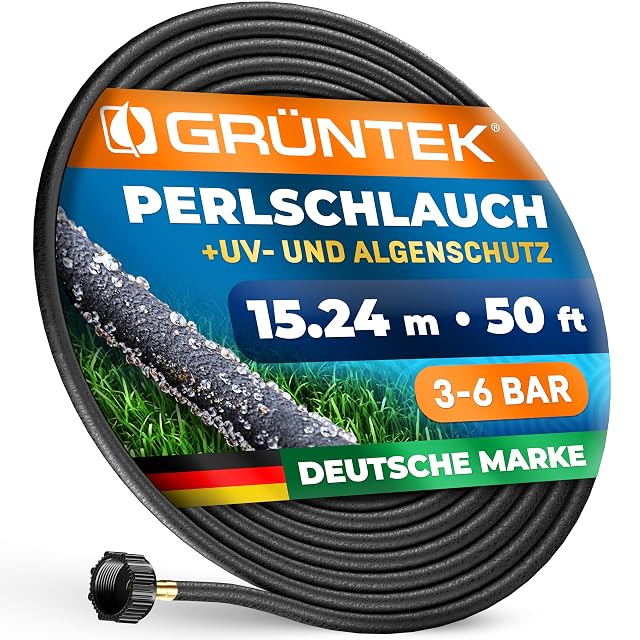
5 to 10 litres per minute over the whole hose.
3 to 6 bar operating pressure, given also as 50 to 100 psi.
12 mm inside diameter, 13 mm outside. 1550 g. 15.24 m — which
is fifty feet, and the reason for the odd number.
That is more than any other soaker here publishes, and it is enough to compare.
Divided out, so it can be compared
5 to 10 litres a minute across 15.24 metres is roughly 0.33 to 0.66 litres
per metre per minute, which is about 20 to 39 litres per metre per hour.
Now set that against the rest of this shelf:
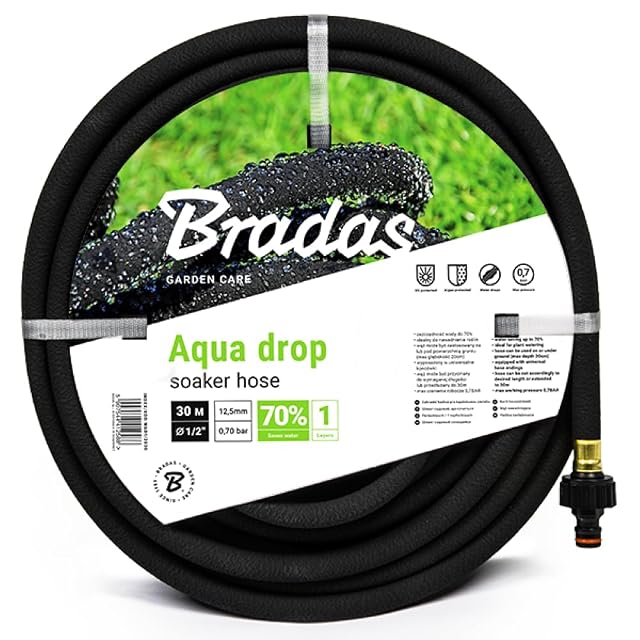
One soaker publishes 6 to 8 litres per metre per hour at 0.6 bar.
Another publishes 0.76 to 1.26 litres per metre per minute at 0.7 bar,
which is 46 to 76 litres per metre per hour.
Three products, three answers, spanning more than a factor of ten — and the
one quoting the highest pressure sits in the middle.
Nothing published on this shelf explains that. Different porosities, different
test methods and different definitions of “flow” would all produce it, and this
page has no way to tell which. What it can do is state the numbers in one unit
so that nobody compares 8 against 10 and thinks they are close.
The pressure disagreement
This listing says 3 to 6 bar.
Another soaker on this shelf says 1 bar maximum, in order to achieve even
watering, and adds that a low pressure is what the product needs to work
satisfactorily over time.
Those are opposite pieces of advice about the same category, from two
manufacturers, both published.
The mechanism behind the low-pressure argument is easy to state: a porous hose
weeps most where the pressure is highest, which is at the tap end. Push hard
and the first few metres flood while the far end barely wets. Run it gently and
the pressure is more even along the length, so the wetting is too.
That is a reason to be cautious with a high figure. It is not evidence that
this hose is wrong, and this page does not turn one manufacturer’s guidance
into a verdict on another’s product.
Burying it
Stated as possible, and it is the single biggest improvement available to a
soaker hose.
On the surface, a soaker loses water to evaporation and to the air above the
soil, and it sits in the sun degrading. Under 5 to 10 cm of soil or a mulch, it
delivers at root depth, loses nothing to the air, and is out of the UV.
The cost is that you cannot see it. A blocked or split buried soaker announces
itself only as a dry patch weeks later, and the usual fix is digging.
Algae inside, UV outside
Both named, and both are the real failure modes.
Algae grow inside any hose that holds still water in daylight, and in a
porous hose they block the pores from the inside. That is what turns a
five-year-old soaker into a plain hose with a wet patch near the tap.
UV degrades the outer material of anything left on a bed all summer.
Naming both is more than most of this shelf does. Neither is quantified.
Availability
From 25 € to 30 €, that being the spread across the German, French, Italian and Spanish Amazon stores on the day of the survey.
Beyond the euro zone, the American Amazon store prices it in its own currency, which the spread above sets aside.
Listed and unsold: the British Amazon catalogue holds the reference with nobody behind it.
Taken from Keepa on the day this page was last revised; stock and prices move without notice.
Prices quoted in this text were read on 26 September 2026. The live price is at the top of the page.