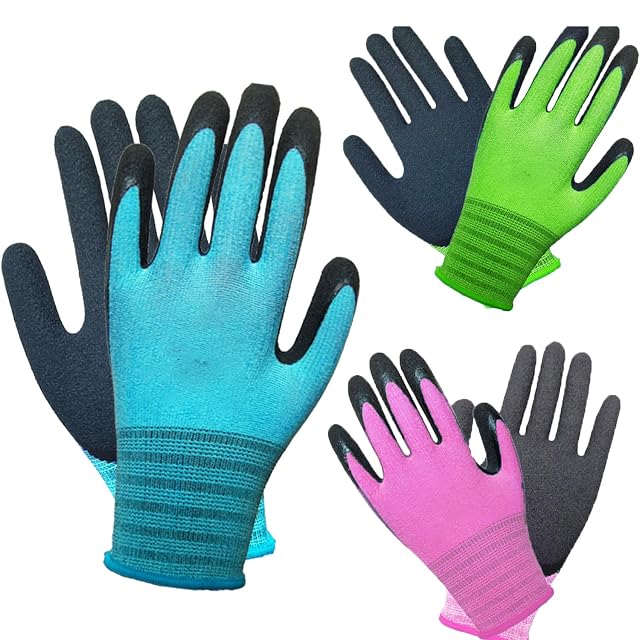
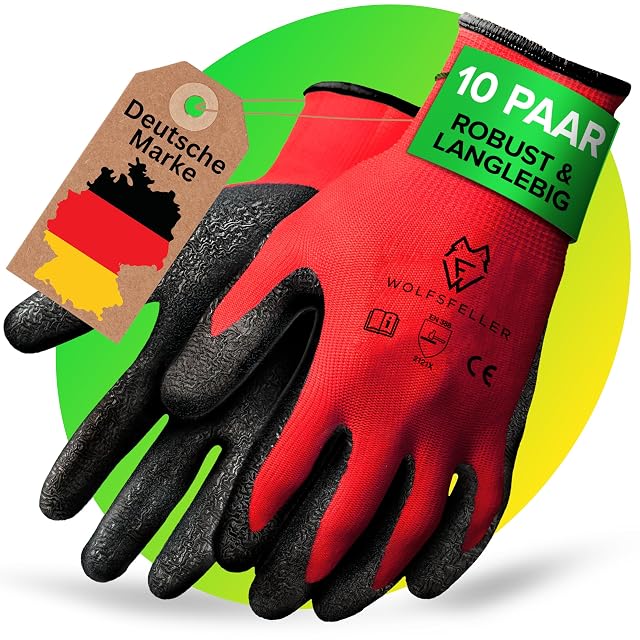
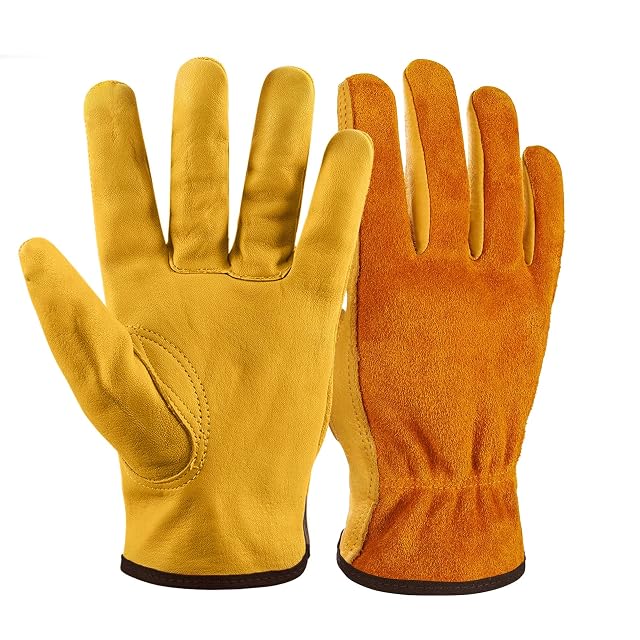
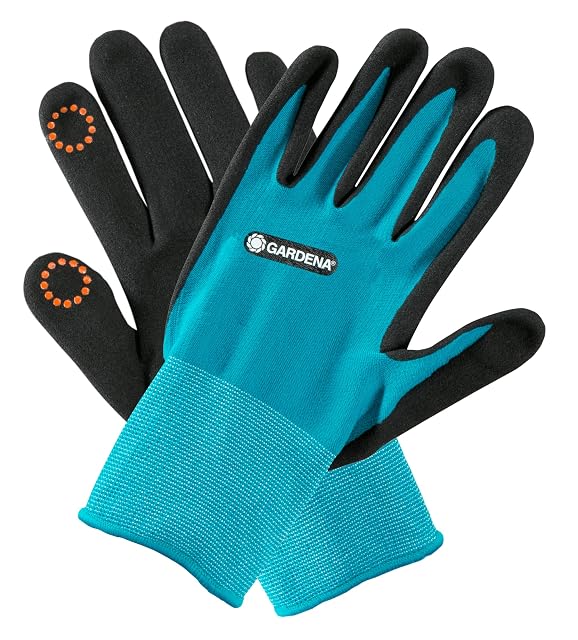
Three pairs, which is the right number
About 2.33 € per pair, on a shelf where the range runs from 0.92 € for a twelve-pack
to 9.99 € for a single pair of leather gloves.
And three is a genuinely sensible quantity for a garden, for reasons nobody advertises.
Gloves get wet. Not from rain — from the job. Watering, handling wet compost, emptying a
water butt, washing a tool. A soaked pair takes a day to dry, and a damp glove is colder and
more uncomfortable than no glove.
Gloves get lost. In the shed, under a hedge, in a wheelbarrow, on a wall. One glove of a
pair is the most commonly lost object in a garden.
Gloves get separated by task. Nobody wants to handle seedlings in the pair that has just
been used for a bag of manure.
Three pairs means there is always a dry clean one, and that is the whole argument. Two other
products on this shelf go further with ten and twelve pairs.
Machine washable, and nobody else says it
“Reusable and washable: they are very hard-wearing work gloves and washable; you can wash
them by hand or in the washing machine.”
The only washability statement in this family, and it changes the economics of everything on
this shelf.
Most garden gloves are thrown away dirty, not worn out. The knit is fine, the coating is
fine, and they are stiff with dried mud and unpleasant to put on.
A coated knit survives a wash. The liner is polyester, the coating is rubber, and neither
objects to a cool cycle with ordinary detergent.
One rule the listing does not give: air dry, away from heat. A radiator or a tumble dryer
hardens a latex or nitrile coating and cracks it — which is also why gloves left on a sunny
wall all summer are stiff by September.
Washing a pair four times rather than buying four pairs is the real saving, and it is only
available to somebody who knows it is allowed.
The crinkle latex palm
“Crinkled latex on the palm keeps the gloves a very nice anti-slip function.”
A crinkle finish is a coating dipped so that it sets in fine wrinkles rather than
smooth, and it is the standard choice for wet handling.
The mechanism is the same as a tyre tread. A smooth coating on a wet object floats on a
film of water and slips. Ridges give the water somewhere to escape to, so the rubber
touches the object.
Across this shelf the same problem is attacked four ways: dots on one nitrile glove, this
crinkle, a 3D grip pattern on another latex glove, and a latex profile on a
third.
And latex is the grippiest of the coatings here, wet or dry. It is softer and more
elastic than nitrile or polyurethane, so it conforms to what it is holding.
Which brings the thing this listing does not mention
Natural rubber latex is a recognised allergen.
Three of the seven gloves on this shelf are latex-coated. None of the three says so.
The relevant detail is that latex sensitivity is typically acquired through repeated
exposure rather than present from birth — which is the exact profile of somebody who
gardens every weekend for ten years. It is the reason nitrile displaced latex in medical
gloves.
Two gloves on this shelf are nitrile, which is the standard substitute: a synthetic
rubber that is not an allergen, resists oils and does not perish and go sticky with age.
What nitrile gives up is grip, especially wet, and elasticity.
This page states the trade rather than resolving it. For most people latex is simply the
better coating; for anybody with a sensitivity it is the wrong shelf item, and no listing
here helps them work that out.
Seamless polyester liner
“The elastic polyester seamless inner lining and the soft latex coating offer the hands
maximum comfort.”
Seamless is the significant word.
A sewn glove has seams at the fingers — a ridge of doubled material between your skin
and whatever you are holding. It bunches, it catches, and it is where blisters start under
repeated pressure.
A seamless knit is knitted as a tube, like a sock, so the inside is continuous. With an
elastic yarn it stretches to the hand rather than being a size that approximately fits.
Two other gloves on this shelf name a seamless liner, and it is the single feature that most
distinguishes a comfortable coated glove from an irritating one.
Polyester as the liner fibre is durable, cheap, dries quickly, and is less absorbent
than cotton — which is good for washing and less good for sweat, since it does not take up
moisture the way a cotton liner does.
And what it will not do
Stop a thorn.
This is a coated knit. The coating is on the palm and the fingers; the back is open knit for
breathability; and a rose thorn, a bramble, a blackthorn spine, a holly leaf or a berberis
spike goes through knitted fabric as though it were not there.
Six of the seven gloves on this shelf are coated knits. One is leather, and it is the
only product in this family that offers puncture and thorn resistance.
For weeding, potting, raking, planting and handling tools, a coated knit is the right and
comfortable choice. For pruning roses or clearing brambles it is not, and nothing on this
shelf but the leather pair will do.
What goes unpublished
No size at all.
That is the one serious omission. Every other glove on this shelf states one — 7/S,
8/M, M, 9, 9, 10 — and a glove is the one product where the size is the
specification.
A glove too large has loose fingertips, which means you cannot feel anything, cannot
pick up a seed, and the loose material catches and tears. A glove too small is
uncomfortable in ten minutes.
No standard. One glove on this shelf cites EN 388, and even that cites the standard
without its four performance digits.
Availability
From 7 € to 11 €, that being the spread across the German, French, Italian and Spanish Amazon stores on the day of the survey.
Beyond the euro zone, the British Amazon store prices it in its own currency, which the spread above sets aside.
Nothing came back from the American Amazon store at all; the buy button there runs a search rather than opening an empty page.
Taken from Keepa on the day this page was last revised; stock and prices move without notice.
Prices quoted in this text were read on 26 September 2026. The live price is at the top of the page.