The one standard anybody cites here
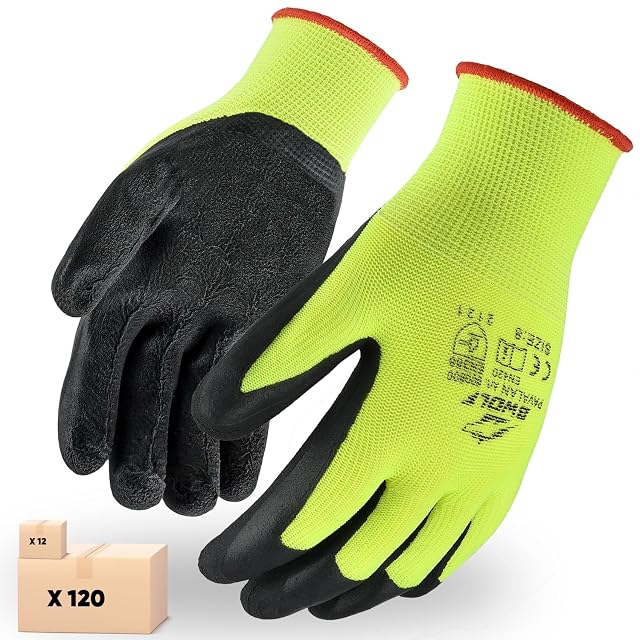
“EN 388 EU standard: approved according to the European safety standard for the protection
of hands against mechanical risks, EN 388.”
Seven glove products in this family. One cites a standard.
What EN 388 is, and why it matters more than an adjective
Every other listing on this shelf describes its protection in words: robust, hard-wearing,
durable, abrasion-resistant, highest puncture resistance.
EN 388 is the standard that turns those words into numbers.
A glove tested to it is assessed against four mechanical hazards:
Abrasion — how many cycles of a rotating abrasive before it wears through.
Blade cut — resistance to a circular blade drawn across it.
Tear — the force needed to propagate a tear.
Puncture — the force needed to push a standardised point through it.
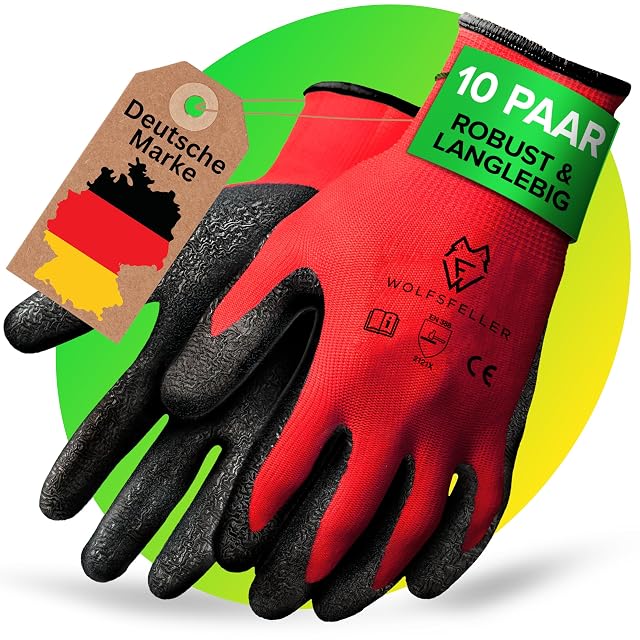
Each gets a score, and the results are printed on the glove as a four-character code
beneath a small hammer pictogram.
That is a genuinely useful thing, because it lets two gloves be compared on the same
measurements rather than on their sellers’ vocabulary.
And the half this listing does not give
The four digits.
“Approved according to EN 388” says the glove was tested. The code says how it
performed — and the scale runs from a glove that barely resists anything to one that
resists a great deal.
Without the digits, the citation establishes that a test exists and not what it found.
This page credits the listing for being the only one in the family to reference an external
standard at all, and notes plainly that it publishes the reference and not the result.
The code will be printed on the glove itself. It is worth reading on arrival, and the
puncture digit is the one that matters most in a garden — for the reason below.
What no coated knit on this shelf will do
Stop a thorn.
Six of the seven products here are coated knits: a knitted liner with a rubber or plastic
film dipped onto the palm.
A knit is loops of yarn with gaps between them, and the coating is a thin flexible film
on top — thin deliberately, because thickness destroys dexterity.
A thorn is a rigid point a fraction of a millimetre across. It does not cut; it pushes
between the loops, stretches the film until it parts, and goes in.
Against roses, brambles, blackthorn, holly, berberis and hawthorn — which is what a
garden actually contains — no coated knit helps much, whatever its puncture digit says,
because the EN 388 puncture test uses a blunt standardised point rather than a thorn.
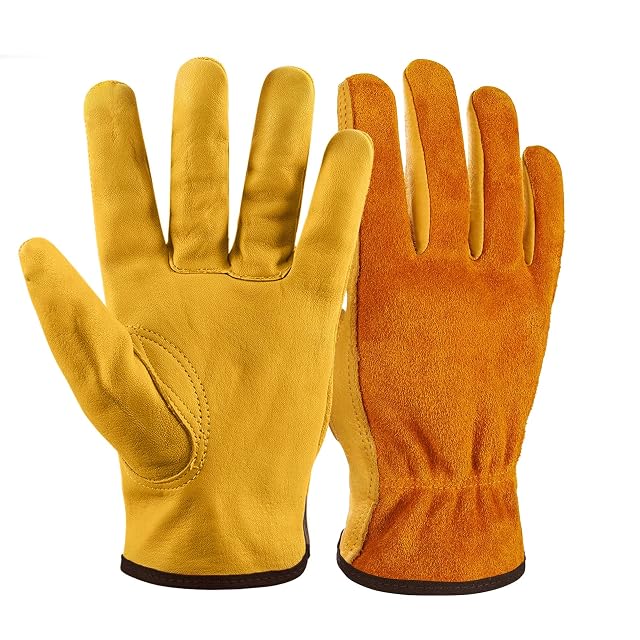
One glove on this shelf is leather, and it is the only product in this family that
genuinely resists thorns.
The latex dip, and the thing three listings here omit
“Dipped in black latex, making them durable, breathable and comfortable.”
Three of the seven gloves on this shelf are latex-coated, and none of them mentions that
natural rubber latex is a recognised allergen.
The relevant point is that latex sensitivity is usually acquired through repeated
exposure rather than present from birth — which is precisely the profile of somebody who
gardens every weekend for years. It is why nitrile displaced latex in medical gloves.
Two gloves on this shelf are nitrile, which is the standard substitute: synthetic, not an
allergen, oil-resistant, and it does not perish and go sticky with age.
What latex gives in return is the best grip on this shelf, wet or dry. It is softer and
more elastic than nitrile or polyurethane, so it conforms to what it is holding.
For most people it is simply the better coating. For anybody with a sensitivity it is the
wrong item, and no listing here helps them notice.
The 3D grip
“The 3D grip technology allows a strong and secure hold when working with slippery
objects.”
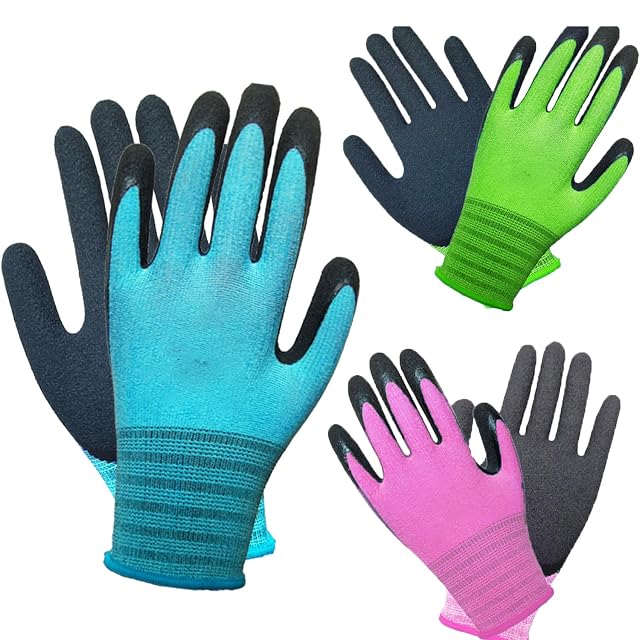
A textured coating rather than a smooth one, and it is the same problem four gloves on this
shelf attack four ways: dots on one nitrile glove, a crinkle finish on one latex
glove, a latex profile on another, and this.
The mechanism is a tyre tread. A smooth coating on a wet object floats on a film of water
and slips; texture gives the water somewhere to escape so the rubber touches the
object.
The long elastic cuffs
“The long elastic cuffs make it easier to put our gloves on and take them off and prevent
dirt and debris getting into the glove.”
More useful in a garden than the listing realises, and it is worth spelling out.
Grit inside a glove is worse than no glove. Soil, compost, sharp sand and a bramble
fragment all go in at the wrist — while emptying a barrow, reaching into a bed, or
pulling weeds. Once grit is in there it is between the knit and your skin, abrading, for the
rest of the job.
A long elastic cuff closes that gap. It is the same reasoning as a boot cuff, and a short
knitted wrist does not do it.
The second half of the claim is also true and often overlooked: an elastic cuff makes a glove
easier to get on, which matters because the hardest glove to put on is a slightly damp
one.
The black palm
“The black colour of the palm makes cleaning easier, hides the dirt and extends the service
life.”
Two of those are real and one is not.
It hides dirt — obviously true, and it is why almost every work glove has a dark palm.
It extends the service life — indirectly, and the mechanism is behavioural rather than
material. A glove that does not look filthy keeps getting used, and a glove that looks
filthy gets thrown away long before it is worn out.
It makes cleaning easier — no, it makes cleaning look successful. One glove on this shelf
states it can be machine washed, which is the only real answer to a dirty coated knit,
and the rule nobody prints is to air dry away from heat, since a radiator hardens and
cracks a coating.
The hi-vis liner
A site feature, and it has one domestic use worth naming.
A yellow glove put down on a lawn, in a hedge, or in a wheelbarrow is findable. A
single lost glove is the commonest way a pair is wasted, and the cheap answer to it on this
shelf is a twelve-pack — which is what this is.
About 1.17 € per pair
Across this shelf the price per pair runs from 0.92 € for a twelve-pack of polyurethane
gloves to 9.99 € for a single pair of leather ones.
At 1.17 € this is the second cheapest, and it is the only pair anywhere on the shelf with
a standard behind it.
The sensible conclusion from the whole family remains two purchases: a box of cheap coated
knits for everything ordinary, and one pair of leather gloves for the rose bed.
This is the best-credentialled answer to the first half.
Availability
From 14 € to 18 €, that being the spread across the German, French, Italian and Spanish Amazon stores on the day of the survey.
Beyond the euro zone, the British Amazon store prices it in its own currency, which the spread above sets aside.
Nothing came back from the American Amazon store at all; the buy button there runs a search rather than opening an empty page.
Taken from Keepa on the day this page was last revised; stock and prices move without notice.
Prices quoted in this text were read on 26 September 2026. The live price is at the top of the page.