Garden hoses
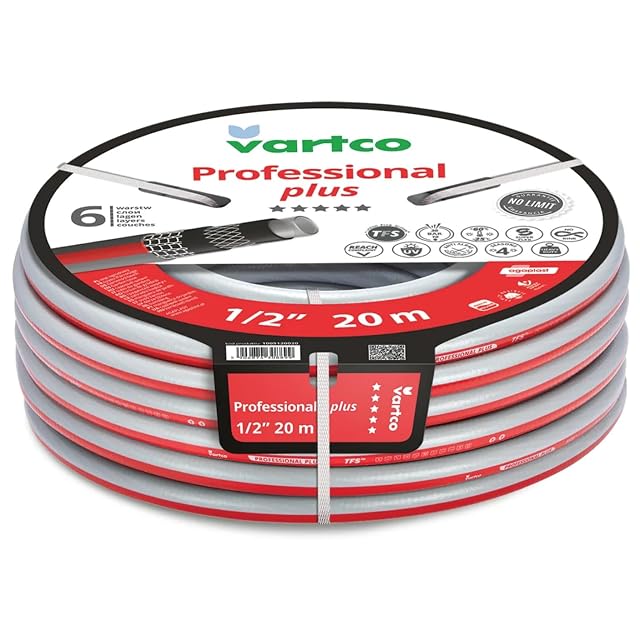
Vartco Professional Plus
The highest burst figure here at 30 bar, the widest temperature range, and a food-contact declaration with a caveat.
−25 to +60 °C
The widest range on this shelf, and the cold end is 15 degrees below the only
other hose here that publishes one.
That is the specification that matters in practice. PVC stiffens as it cools,
and a hose that has gone rigid does not uncoil, it hoops — and forcing it round
a corner leaves a crease that becomes next season’s split.
A hose usable at −25 °C is one you can take out in February. It is still not a
hose that can be left full through a frost: water expands when it freezes
and splits any hose at any rating. Draining before winter is unchanged.
Six layers and the anti-twist claim
Six is the most on this shelf, against four, three and an unstated number.
The claim attached to them is TFS, the maker’s name for a reinforcement
laid to resist torsion as well as pressure.
That is the right thing to engineer for. A braid laid only for pressure holds
the hose round and lets it corkscrew, and the corkscrew is what kinks. Most
hoses are replaced because they kinked at the same spot until they split, not
because they burst.
Whether this particular layup achieves it, the listing asserts and this page
does not test.
30 bar, and the honest reading of it
The highest burst figure here.
Burst pressure is where the hose fails. It is not an operating pressure, and it
is the only pressure six of the seven listings on this shelf publish.
The seventh publishes both: 9 bar working, 18 bar burst. That single
measured pair is the whole of what this shelf reveals about the relationship,
and it says a burst number roughly doubles a working number.
By that one data point, 30 bar burst describes a hose with a wide margin. It
does not license running it at 30 bar, and nothing here says what it may be run
at.
The listing states compliance with EU Regulation 10/2011 on plastic
materials intended to come into contact with food.
And then, twice in the same listing, the maker says it does not recommend
using the hose in installations, for example in motorhomes.
Both of those are true at once, and the distinction is worth understanding.
The regulation is about the material: what the plastic may release into
what passes through it. That is a laboratory question about composition.
A drinking-water installation is a different question. Water sits in it,
warm, for days; biofilm grows in a hose the way it does not in a pipe; and a
garden hose is not certified for permanent potable plumbing anywhere.
A manufacturer declaring its material compliant and then declining the
installation use is being careful rather than inconsistent, and this page
reports both halves.
Availability
From 22 € to 32 €, that being the spread across the German, French, Italian and Spanish Amazon stores on the day of the survey.
Beyond the euro zone, the British Amazon store prices it in its own currency, which the spread above sets aside.
Nothing came back from the American Amazon store at all; the buy button there runs a search rather than opening an empty page.
Taken from Keepa on the day this page was last revised; stock and prices move without notice.
Prices quoted in this text were read on 26 September 2026. The live price is at the top of the page.