The touchscreen fingertips
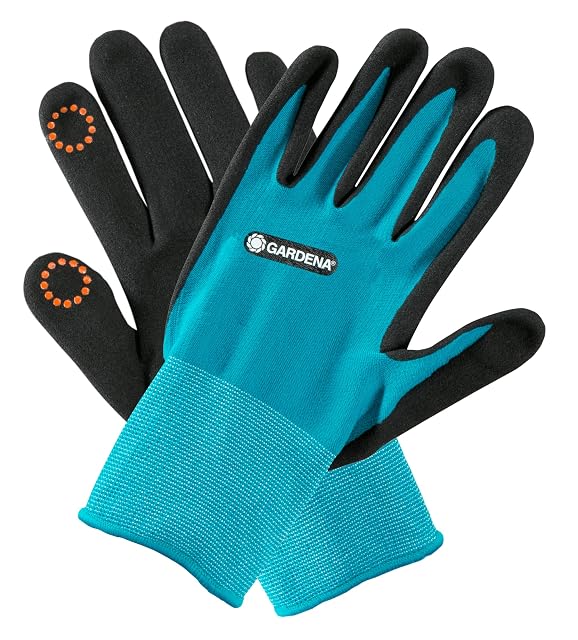
“The fingertips of the index finger and thumb have a special touch function with which
smartphones and tablets can be operated.”
The only glove on this shelf with it, and it is a better feature than it sounds.
How it works, and why ordinary gloves do not
A phone screen is capacitive: it detects a conductive object disturbing a weak
electrical field at its surface. Skin conducts; that is why a fingertip registers.
Knitted fabric does not conduct, so a gloved finger is invisible to the screen.
A touch fingertip has conductive fibre knitted into the tip — very fine metal or
carbon-loaded thread blended with the yarn — so the charge passes through the glove to the
screen.
It is not a coating and it does not wear off the way a printed pad would; it is part of the
knit.
And the reason it earns its place in a garden specifically
Because gardening involves a phone constantly, and hands that are constantly unsuitable for
one.
A photograph of a leaf to identify a problem. A plant name looked up. A watering timer set.
A call answered. A measurement written down. The seed packet’s sowing rate checked against
this site’s lawn seed shelf.
Each of those, with ordinary gloves, means: stop, pull a wet nitrile glove off a damp
hand, do the thing, and work the glove back on. A wet coated glove is genuinely difficult
to put back on, which is why people end up with one glove in a pocket for the rest of the
afternoon.
Several times an hour, that is a real irritation, and no other product in this family
addresses it.
Nitrile, and the point three listings here do not make
The palm coating is nitrile, and the listing gives the correct reason: “the nitrile coating
in the palm protects the hands against wet when working in damp soils or earth.”
Nitrile is a synthetic rubber. Latex is natural rubber, from a tree.
Three gloves on this shelf are latex-coated and none of them mentions that natural rubber
latex is a recognised allergen.
The detail that matters is that latex sensitivity is typically acquired through repeated
exposure rather than present from birth — the exact pattern of somebody who gardens every
weekend for years. It is the reason nitrile replaced latex in medical gloves.
What nitrile gives: no allergen, resistance to oils and many chemicals, and it does not
perish and go sticky with age.
What latex gives: better grip, especially wet, and more elasticity.
Two gloves on this shelf are nitrile. This is one of them.
The stretch panels
“The stretchable material at the cuff and on the back of the hand makes the glove extremely
flexible. As a result the glove adapts to every movement.”
Worth explaining, because it is where a coated glove is either comfortable or not.
The palm is coated and therefore stiff. Nitrile does not stretch much; that is what
makes it a barrier.
So all of the glove’s flexibility has to come from somewhere else — and the two places that
matter are the back of the hand, which stretches every time you close your fist, and
the cuff, which has to open to get the hand in and then close to keep soil out.
A glove that is coated all round is a glove that fights your hand. One with a knitted
stretch back breathes as well, which is the difference between an hour’s work and ten
minutes.
What it cannot do
Stop a thorn.
Nitrile on the palm and knitted fabric on the back. A rose thorn, a bramble, a blackthorn
spine, a holly leaf or a berberis spike passes through both.
Six of the seven gloves in this family are coated knits, and every one of them shares this.
One is leather, and it is the only product on this shelf offering puncture and thorn
resistance.
The listing’s own job list is honest about the territory: weeding, repotting, pricking out.
Those are soil jobs, and this is a soil glove.
The price, stated plainly
About 7.99 € for one pair.
Across this shelf, the price per pair runs:
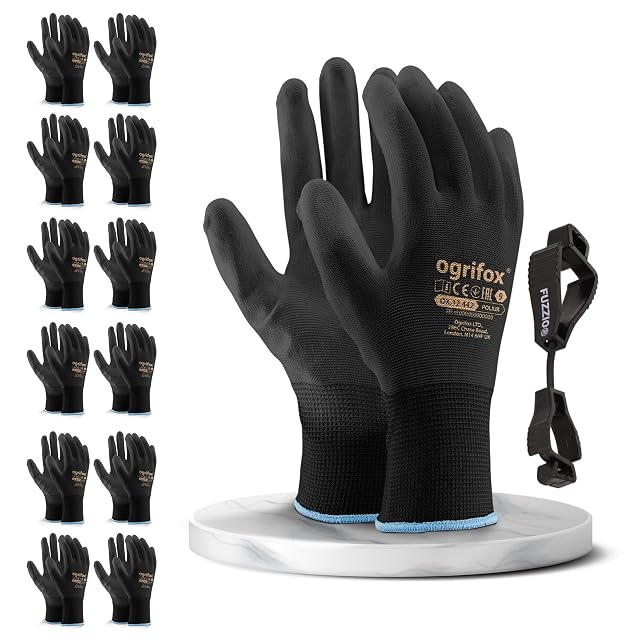
0.92 € — a twelve-pack of polyurethane-coated gloves.
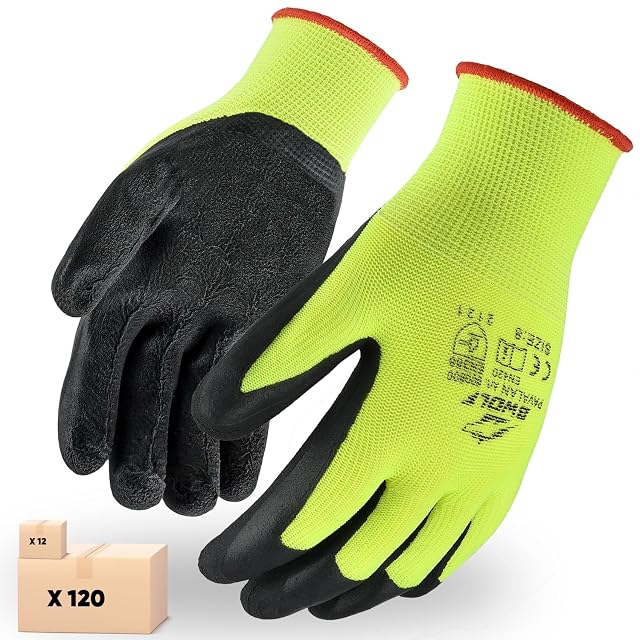
1.17 € — a twelve-pack of latex-coated gloves, and the only pair here citing a standard.
1.90 € — a ten-pack of latex-coated gloves.
2.33 € — a three-pack of latex-coated gloves, the only ones stated washable.
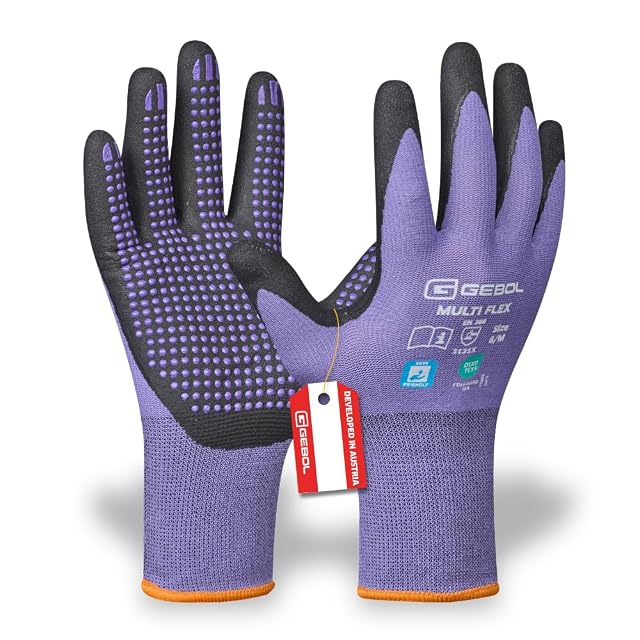
4.59 € — a single pair of nitrile gloves cut for women’s hands.
7.99 € — this.
9.99 € — a single pair of leather gloves, the only thorn-resistant product here.
That is a factor of nearly eleven across one shelf.
What this pair buys at the top of the coated-knit range is the touch fingertips, the
stretch panels, and a nitrile coating. Whether that is worth eight times a bulk pair depends
entirely on how often the phone comes out — and for a lot of people the honest answer is
several times an hour.
What goes unpublished
No standard. One glove on this shelf cites EN 388, the European standard for
protection against mechanical risks — and even that one cites it without its four
performance digits, which are the part that says how it performed.
No liner fibre. “Stretchable material” is not a specification; two gloves on this shelf
name nylon with elastane and polyester.
No washing guidance. One glove here states it can be machine washed, which is the single
most useful thing on this shelf — coated knits survive a cool cycle, and the rule nobody
prints is to air dry away from heat, because a radiator hardens a nitrile coating and
cracks it.
Availability
From 8 € to 11 €, that being the spread across the German, French, Italian and Spanish Amazon stores on the day of the survey.
Beyond the euro zone, the American and British Amazon stores price it in their own currencies, which the spread above sets aside.
Taken from Keepa on the day this page was last revised; stock and prices move without notice.
Prices quoted in this text were read on 26 September 2026. The live price is at the top of the page.