What it is for, which is a real problem
A dry lawn.
Not a lawn that suffers in a heatwave — every lawn does — but the kind that browns
off by mid-July every single year: south-facing, thin soil over sand or gravel,
no shade, and a hose that never keeps up.
That case is genuinely under-served. Most lawn seed is sold on speed and wear,
and the grasses that deliver those are not the grasses that survive drought.
And the species this listing does not name
Drought tolerance in a lawn comes from fescues.
Fine-leaved, deep-rooting grasses that push roots well below the top few
centimetres where ryegrass lives, and that respond to a dry spell by going
dormant — browning off, shutting down, and regreening when rain returns —
rather than by dying.
Tall fescue in particular roots deeper than anything else in common lawn use.
Red and chewings fescues are the fine ones that make an ornamental lawn and
tolerate poor, dry soil.
Perennial ryegrass, which is what almost every “fast-germinating” mix is
mostly made of, is not drought-tolerant. It is shallow-rooted and it wants water.
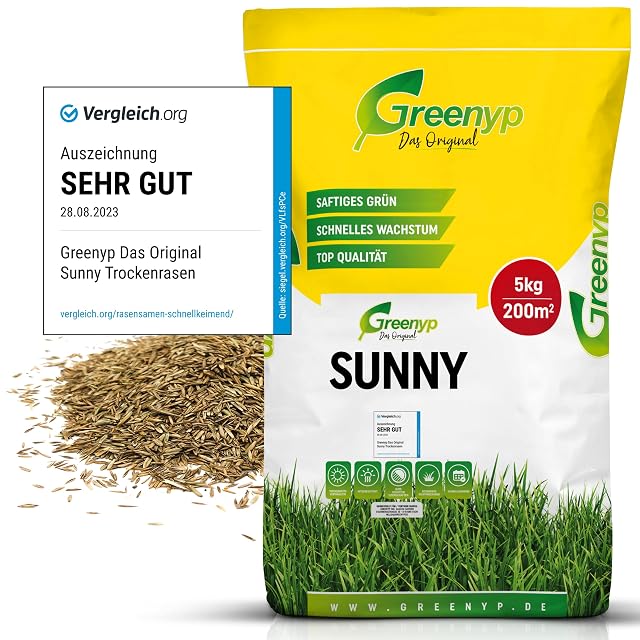
This bag claims to be drought-tolerant, heat-resistant, tolerant of strong
sunlight, and to have good shade properties — and names no species at all.
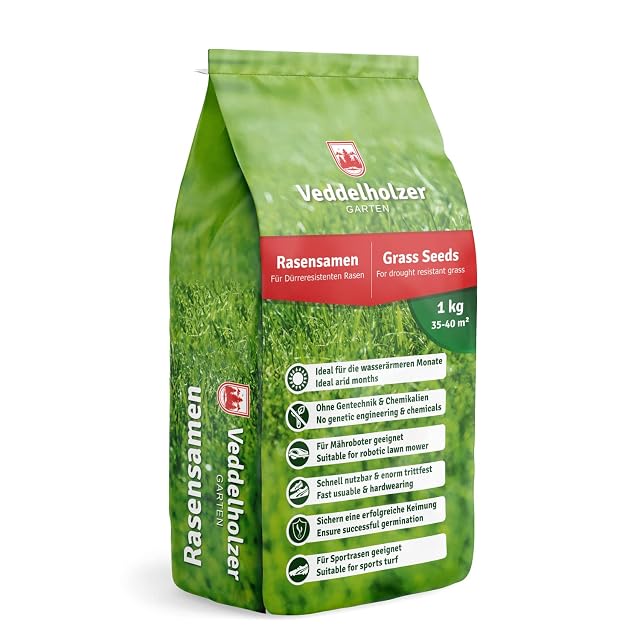
One bag on this shelf publishes its mix. That single line is what makes claims
like these checkable, and it is absent here.
The distinction that matters most on this page
A drought-tolerant lawn survives a dry August. It does not necessarily
stay green through one.
Those are very different expectations, and this listing does not separate them.
Dormancy is how grass handles drought: it goes straw-coloured, it stops growing,
and the crown stays alive. Three weeks after rain it is green again.
A lawn that stays green through a rainless month is a lawn that is being watered,
or a lawn with a deep moist soil underneath it. No seed changes that.
So the right expectation from a genuine drought mix is: it comes back, where
a ryegrass lawn on sand would have died in patches and needed reseeding.
Two weeks
Published, and more useful than “fast”.
Two weeks to first results is consistent with a mix that has some ryegrass in it —
the fescues that would carry the drought claim take longer, and a fescue-heavy
mix is a three-to-six-week proposition.
That is not a contradiction; most mixes carry both, and the ryegrass covers the
ground while the fescues establish underneath. It would be a great deal easier to
say so with a ratio.
The rate, and the price
5 kg for 200 m², which is 25 g/m² — the middle of this shelf, where the
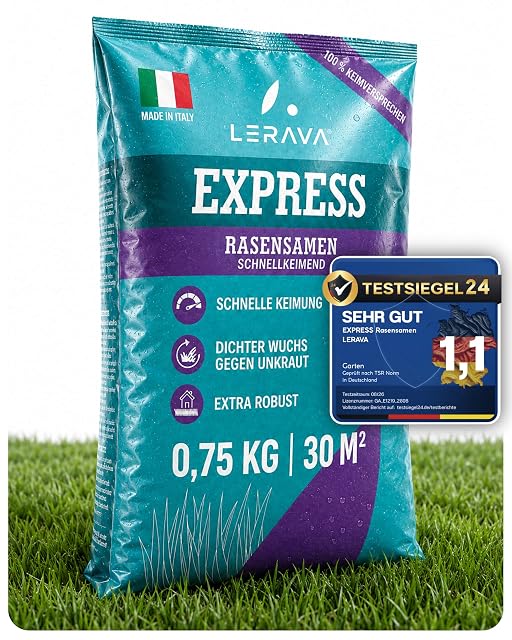
published rates run 20, 25, 25, 25–29 and 25–30.
About 5.78 € per kilo, and about 0.145 € per square metre.
Across this family those figures run from 4.40 € and 0.11 € up to
15.87 € and 0.40 €.
So this is the third cheapest per kilo, behind only the two 10 kg sacks — and at
5 kg it is a size that suits an actual lawn rather than a patch. Two hundred
square metres is a normal back garden.
The fourth feature line
“Greenyp’s promise — we guarantee the best results on our products. If something
is not right, contact us and together we will find a solution for your perfect
lawn.”
That is one of only four things the manufacturer chose to publish about the
product, and it contains no information about it.
It is reported here because a shelf where one listing publishes a species ratio
and another spends a quarter of its description on customer service is worth
describing accurately.
What goes unpublished
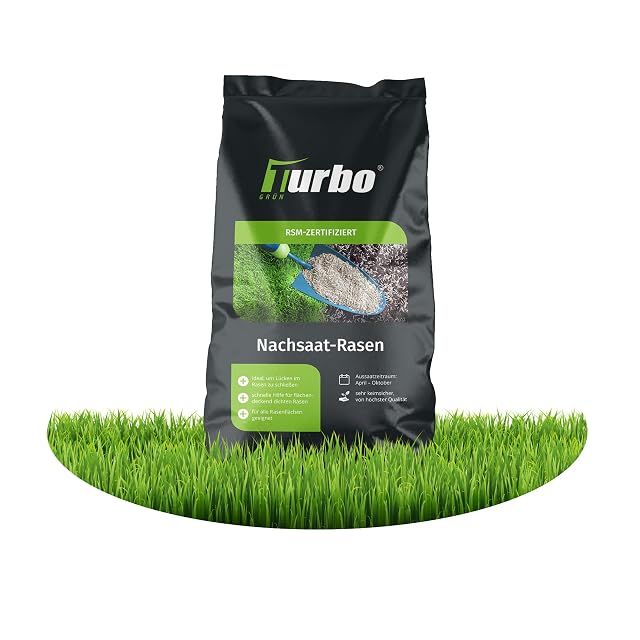
No species. No germination temperature — three bags on this shelf publish
one, at 8 °C, 10 °C and 10 °C, and it is the only reliable green light in the
spring calendar. No sowing window.
And on a bag sold for dry ground, no guidance on the one thing that decides
whether a drought mix ever establishes: germinating seed cannot be allowed to
dry out.
That is the paradox of sowing a drought lawn. The finished grass will handle a
dry August; the seed will not handle a dry week. A sandy seedbed in June needs
watering daily until the grass is up, and after that it can largely be left
alone.
Availability
Around 29 €, read at the German Amazon store on the day of the survey.
Nothing came back from the American, British, French, Italian and Spanish Amazon stores at all; the buy button there runs a search rather than opening an empty page.
Taken from Keepa on the day this page was last revised; stock and prices move without notice.
Prices quoted in this text were read on 26 September 2026. The live price is at the top of the page.