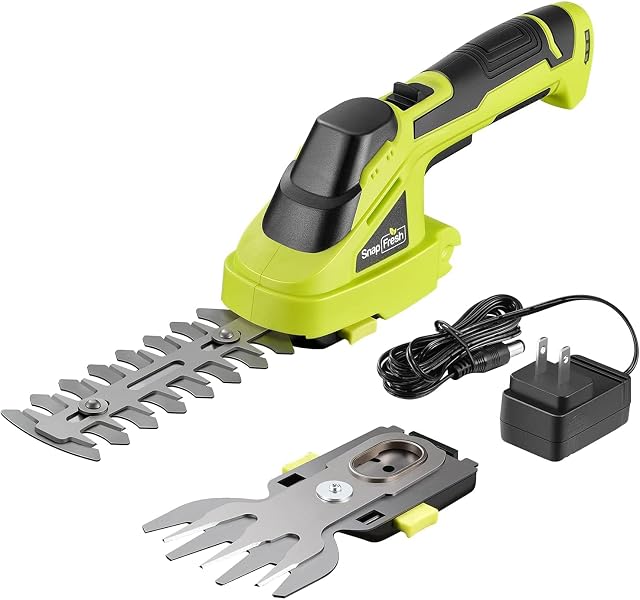
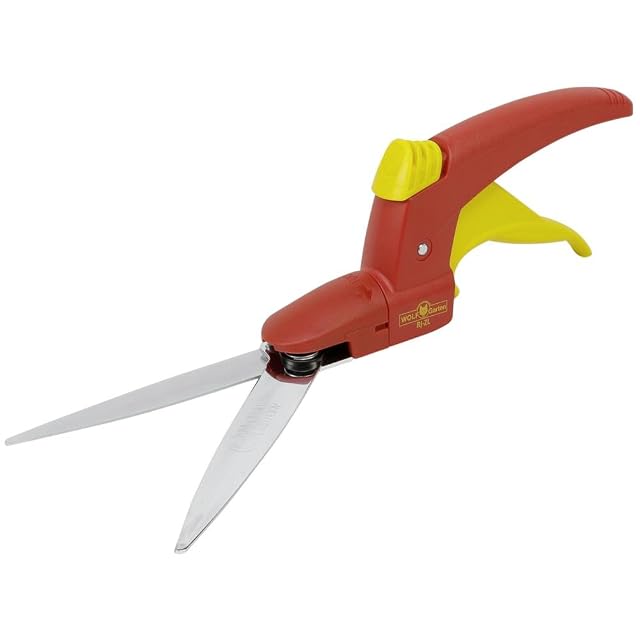
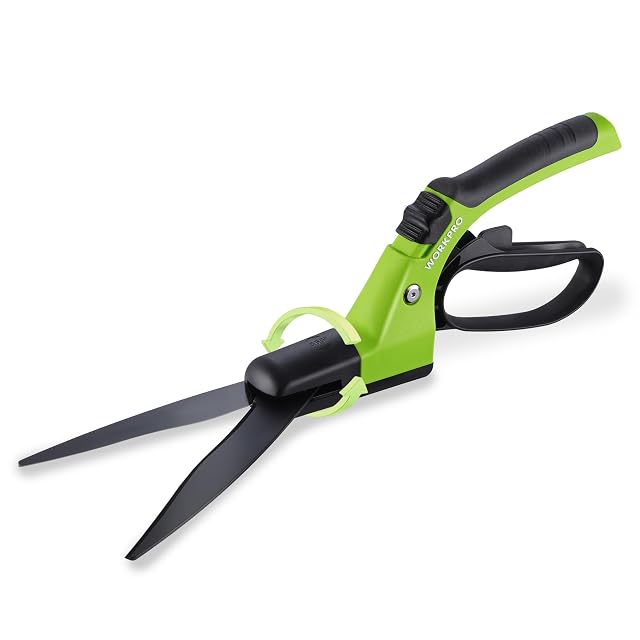
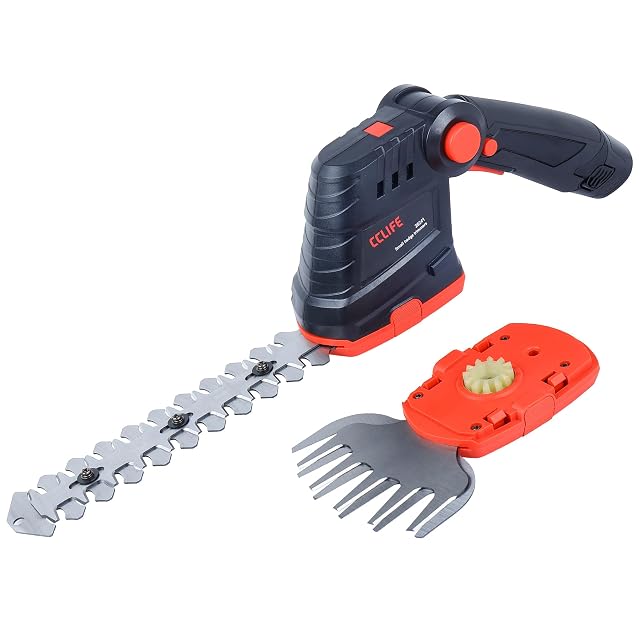
The disclosure that has to come first
From the third feature line, as published:
“2 versions shipped at random — VERSION 1 contains a charger and a safety key
(triple protection), and VERSION 2 comes with a USB-C cable and without the safety key
on the back of the device (double protection). The safety switch on top of the device
can be released after starting the device.”
Two products, one listing, and the buyer does not choose.
Where the difference really lies
The safety key is a removable interlock. It is a small plastic part that has to be
in place for the tool to run, and it is taken out and kept separately when the tool is
stored.
That is a standard arrangement on hand-held powered blade tools, and its purpose is
specific: a tool without the key cannot be started by anybody, including a child
who finds it in a shed and presses the trigger.
Version 1 has it. Version 2 does not, and the manufacturer’s own terms —
“triple protection” against “double protection” — say so directly.
Both versions have the trigger interlock on top, which has to be held to start and can
be released once running.
This page reports the disclosure rather than judging the product. The relevant point
for a buyer is that the safety arrangement is not knowable before delivery, and
that it is worth checking on arrival which one came.
The secondary difference matters too: a charger against a USB-C cable. USB-C is
more convenient — any phone charger works — and the listing does not say whether the
cable version charges more slowly.
The specifications, which are the best on this shelf
This is the only listing in the family that publishes any of these:
0.62 kg — the only weight on this shelf, hand or battery.
Up to 60 minutes — the longest stated runtime here.
1500 mAh, at 7.2 V — the only battery capacity published.
1100 rpm.
8 mm cutting thickness.
83 mm grass blade and 140 mm hedge blade.
Sixty minutes, and why it is credible
The other battery shear on this shelf that publishes a runtime states 15 to 20
minutes.
That is a factor of three to four, and it is not implausible.
Voltage and current together are the draw. At 7.2 V this tool is pulling less than
a 10.8 V machine from a comparable cell, and it is doing lighter work — a 83 mm grass
blade at 1100 rpm is not a hedge trimmer.
So a small battery lasts a long time because the load is small. That is the correct
reading, and it is also the limitation: this is the least powerful battery shear
here, and 8 mm is the thickest thing it claims to cut.
The third battery shear on this shelf publishes no runtime at all, because its battery
is sold separately.
0.62 kg, which is the number that decides the job
A grass shear is held out in front of you, at arm’s length, pointed down.
That is the worst possible position for a weight, and it is why a battery grass shear
being 200 grams lighter matters more than the same difference on a drill.
620 grams is light. Over an hour of edging — which the runtime invites — it is the
difference between finishing and stopping, and no other product on this shelf publishes
a figure to compare it against.
The two blades
83 mm grass, 140 mm hedge, changed without tools.
The width difference is not arbitrary, and it is the same distinction the hand shears
on this shelf make implicitly.
A grass blade is short and wide with fine teeth. Grass is soft, slippery and
arrives in hundreds of thin blades at once, so the blade grips many of them and takes a
broad swathe.
A hedge blade is longer with coarser teeth further apart, to trap a single woody
shoot and shear it rather than push it away.
At 83 mm this is the narrowest grass blade on this shelf — the other two battery
models are 100 mm and 120 mm. That is 20 to 30 per cent less grass per pass, which on a
long boundary is real time.
What it buys is the weight and the runtime.
And the honest limit of the integrated battery
“Integrated 1500 mAh batteries.”
Built in, not removable.
Two consequences:
You cannot carry a spare. Sixty minutes is the session, and then it is charging.
The third battery shear here is on an 18 V platform where a second pack is a swap.
The tool dies with the cell. Lithium cells lose capacity over cycles regardless of
care — a few hundred cycles takes any pack to a fraction of its original runtime. On a
tool with a removable pack that is a spare part; here it is the end of the tool.
The other battery shear on this shelf makes a point of its removable battery and
explains that the charger connects to the pack rather than the machine.
For a tool used a few times a season, integrated is fine and the weight saving is real.
For a tool used weekly for ten years, it is the thing that ends it.
Availability
From 30 € to 45 €, that being the spread across the German, French, Italian and Spanish Amazon stores on the day of the survey.
Beyond the euro zone, the British Amazon store prices it in its own currency, which the spread above sets aside.
Nothing came back from the American Amazon store at all; the buy button there runs a search rather than opening an empty page.
Taken from Keepa on the day this page was last revised; stock and prices move without notice.
Prices quoted in this text were read on 26 September 2026. The live price is at the top of the page.