The only declaration on this shelf
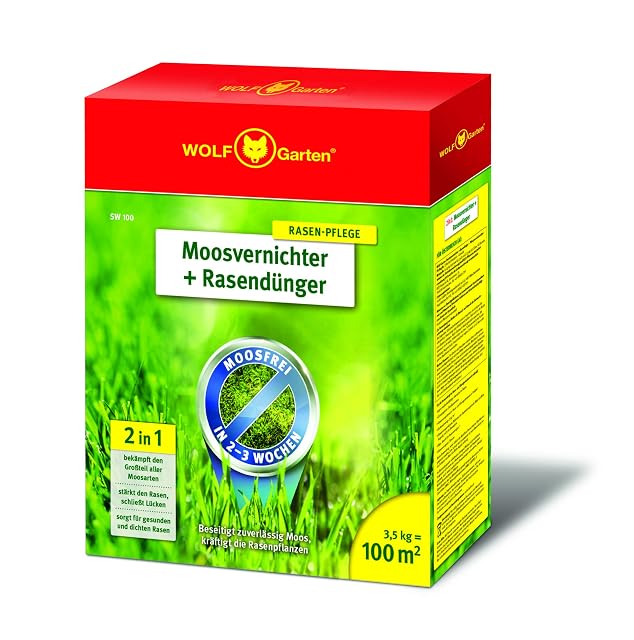
14 % nitrogen. 5 % potassium oxide. 6 % iron.
Five feature lines, one of which is that analysis, and it makes this the only
product in the family whose active content can be checked.
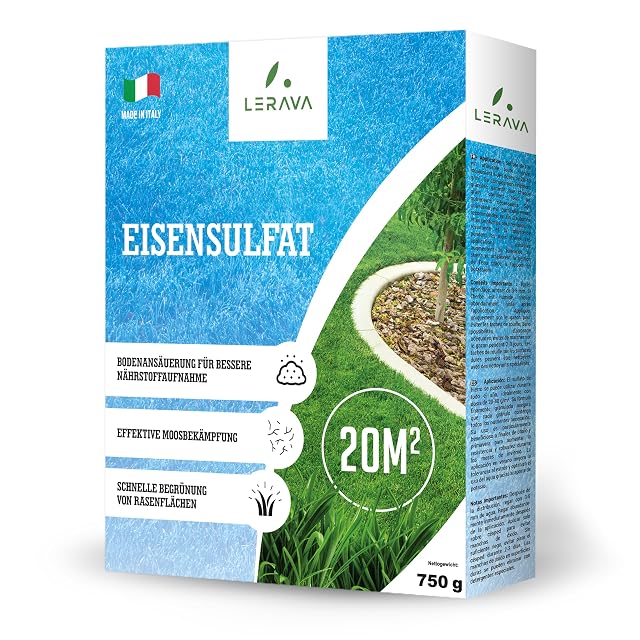
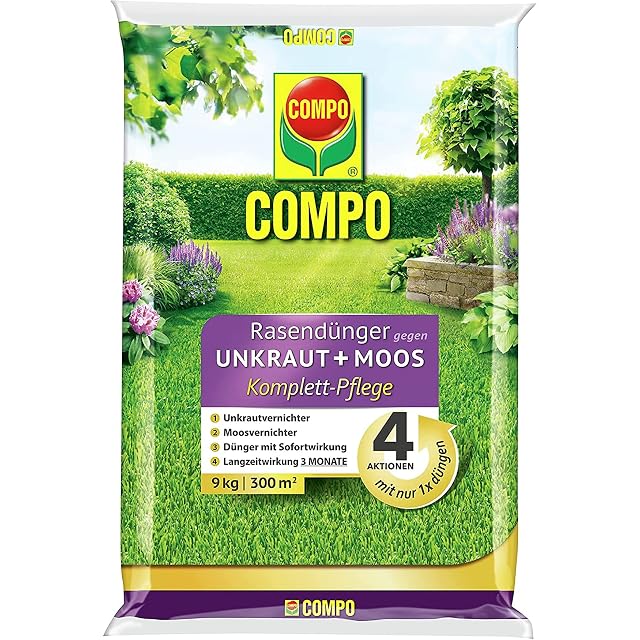
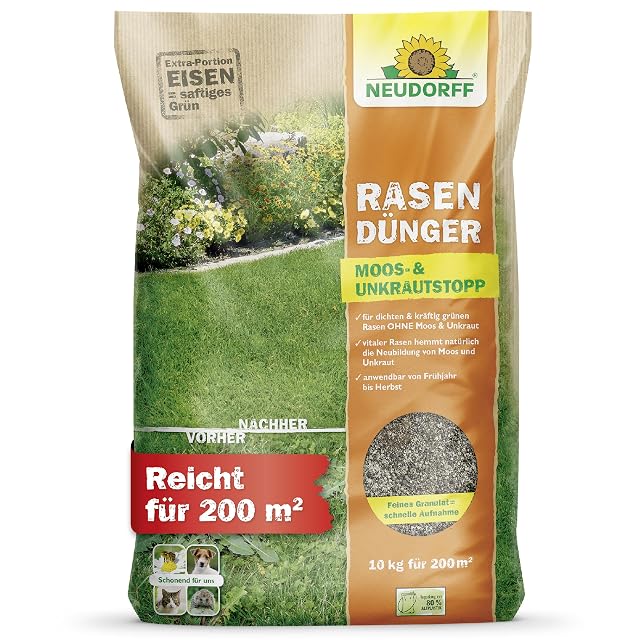
The other two lawn products here name iron without a figure. The three
hard-surface concentrates name no active at all.
What 6 % iron means on the ground
The rate is 35 g/m² — 3.5 kg over 100 m², and the two figures agree.
Six per cent of 35 grams is about 2 grams of iron per square metre.
That is enough to blacken moss within days. Moss has no protective cuticle and no
vascular system; it absorbs water and dissolved minerals straight across its whole
surface, so a soluble iron salt goes directly in and it cannot exclude it.
Grass resists it: a waxy cuticle, roots that regulate uptake, and a growing point
below the surface. At this concentration the grass takes the iron as a nutrient
— which is where “deep green lawn in 7 days” comes from — while the moss dies.
And it is enough to ruin a patio
This is the practical consequence of the same number, and it deserves its own
paragraph.
Iron rusts. Two grams of iron per square metre on concrete, sandstone,
block paving, decking or a gravel path leaves an orange-brown stain that is iron
oxide bound into the surface.
It is not dirt. Brushing does not lift it, washing does not lift it, and a
pressure washer spreads it.
So:
Keep every granule off hard surfaces, and sweep strays back onto the grass
before watering in.
Do not treat a strip of lawn that drains onto a path — the run-off carries the
iron.
Wash the spreader on the grass.
If the lawn meets a light-coloured patio, work the edge by hand rather than with
a broadcast spreader. This site’s spreader shelf explains why: a rotary spreader
throws a cone two to five metres wide, and the two drop spreaders there are
the ones with a hard edge that puts nothing outside their own 40 cm.
Fourteen per cent nitrogen, and when not to use it
This is a growth feed, and the window says so: February to October.
For contrast, every product on this site’s lawn fertiliser shelf is an autumn
feed, and the two that publish an analysis show 5 % and 6 % nitrogen —
deliberately low, because nitrogen makes soft leaf and soft leaf going into winter
is what frost burns and what snow mould colonises.
Fourteen per cent is two to three times that. It is the right analysis for March, April
and May, when you want the lawn to grow vigorously and close the gaps the dead
moss leaves.
It is the wrong analysis for October, and the window’s late edge should be read as
an outer limit rather than a recommendation.
The sequence that actually works
The listing gives two timings — moss cleared in 2 to 3 weeks, deep green in
7 days — and between them they describe the job honestly.
Day 0: apply. The listing does not say so, but moss killers of this type work
best applied to a moist lawn in dry weather, so the granules dissolve onto
the moss and are not immediately washed through.
Day 2 to 5: the moss blackens. The grass starts to green.
Week 1: the colour change the listing promises.
Week 2 to 3: the moss is dead and brittle.
Then: rake it out. This is the step no iron product on this shelf mentions and
it is not optional. Dead moss is still occupying the ground; left in place it
becomes thatch, holds water at the surface, and keeps grass out of the space it
was meant to free. This site’s aerator shelf carries the dethatching rakes.
Then: fill the gaps. Whatever the moss was covering is now bare, and bare
ground in a lawn is where moss comes back. Overseeding is the answer, and this
site’s lawn seed shelf covers the rates — 20 to 30 g/m² — and the one condition
that matters: the seed has to reach soil, which raking has just arranged.
And why the moss was there
An iron treatment resets the symptom and changes nothing about the cause.
Moss colonises where grass is weak, and the four usual reasons are shade,
compaction, poor drainage and cutting too short.
February to October is a wide window precisely because this is a treatment people
repeat. If none of those four changes, they will repeat it every year — and one
product on this shelf is sold on exactly that argument: that a dense well-fed lawn
keeps moss out without any treatment at all.
Not a pesticide
Worth stating on a shelf that also contains a plant protection product
restricted to one application a year with a two-to-three-day exclusion from the
lawn, and three biocides for stone that would kill grass outright.
This is a fertiliser with iron in it. It carries no such restrictions, and it also
is not a weedkiller — it does nothing to dandelions, clover or plantain.
Availability
From 20 € to 30 €, that being the spread across the German and Italian Amazon stores on the day of the survey.
Beyond the euro zone, the American and British Amazon stores price it in their own currencies, which the spread above sets aside.
Nothing came back from the French and Spanish Amazon stores at all; the buy button there runs a search rather than opening an empty page.
Taken from Keepa on the day this page was last revised; stock and prices move without notice.
Prices quoted in this text were read on 27 September 2026. The live price is at the top of the page.