Not for lawns, and not a root killer
Both have to be said before anything else, because nothing in this family’s listings says
the first and this listing overstates the second.
A flame does not distinguish grass from weeds. Used on a lawn it leaves a brown patch
that has to be reseeded. This is a tool for paving joints, drives, path edges, gravel
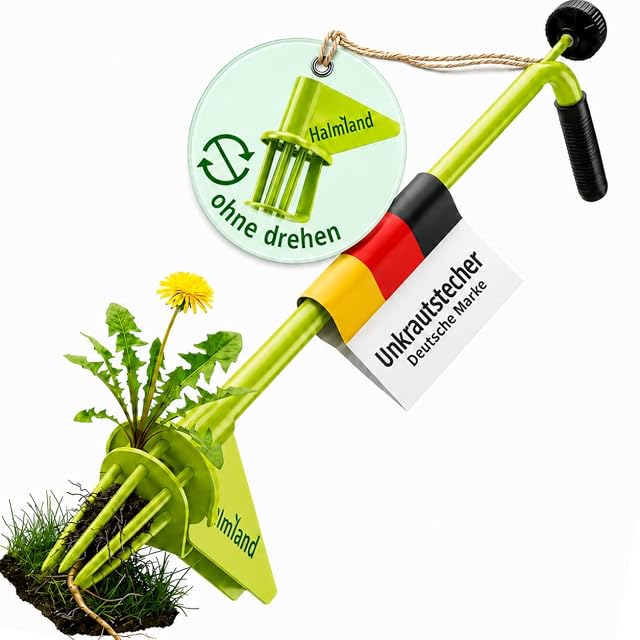
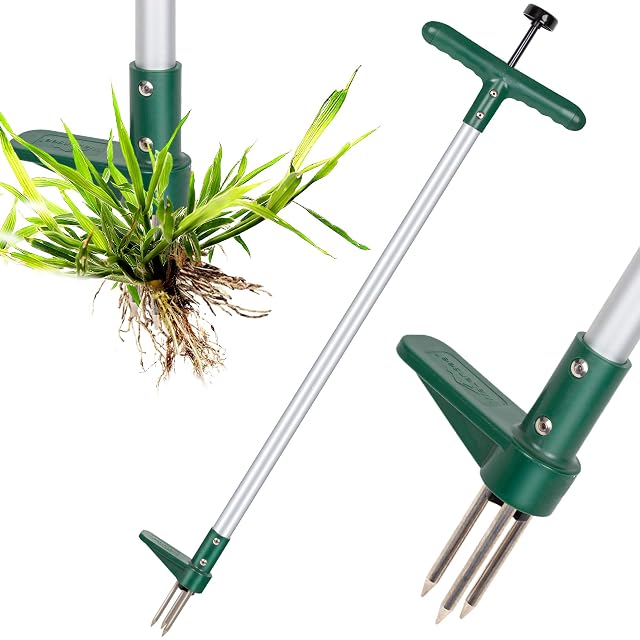
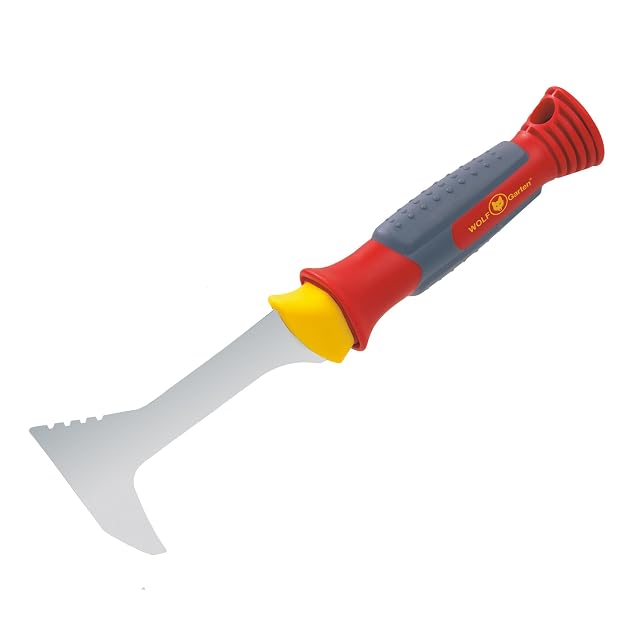
and bare ground. For weeds in a lawn, this site’s weeder shelf has the taproot knives
and claw pullers that lift a root and leave the turf.
And the heat does not reach roots. Which brings us to the first feature line.
The claim, and the correction
“With up to 1,000 °C flame temperature the weed burner brings the cell fluid of the
roots to coagulate — the weed in the garden and on paths dries out within a few days,
entirely without glyphosate or other chemicals.”
The mechanism named is exactly right. Heat denatures the proteins in plant cells and
ruptures the membranes; the plant cannot hold water and dries out over the following
days. That is why flame weeding looks like it has done nothing on the day and looks
convincing a week later.
The word that reaches too far is roots.
Soil is an excellent insulator. Two or three seconds of hot gas at the surface raises
the temperature one centimetre down by very little, and the root is deeper than that.
So the outcome divides:
Annuals die. Groundsel, chickweed, annual meadow grass, seedlings of anything — the
whole plant is above ground.
Perennials regrow. Dandelion and dock from a taproot, couch grass and bindweed from
rhizomes. The top dies back and a new shoot appears within a fortnight.
What does work on perennials is repetition: burn the regrowth every two to three
weeks, and the root spends its reserves rebuilding leaves it never gets to keep. Over a
season or two it exhausts itself.
That is the honest version, and it is a genuinely good way to keep a drive clear without
chemicals. It is not a single-pass solution and the listing implies it is.
97 cm and 1.6 kg
The only product on this shelf that publishes both, and together they are worth more than
the temperature.
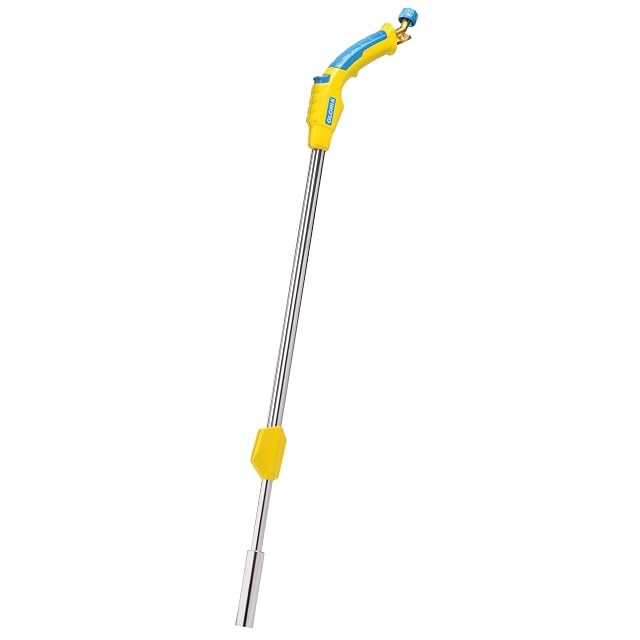
Length decides posture. Ninety-seven centimetres lets an adult work standing, which
is the difference between clearing a drive and giving up halfway. The listing says exactly
that: “remove weeds comfortably standing — back-friendly and without laborious scraping
or bending.”
For comparison, one burner on this shelf publishes 80 cm, another an 85 cm
handle, and three publish nothing.
Weight decides endurance. A burner is held out in front of you, pointed down, for
as long as the job lasts — the same worst-case position as the grass shears on this site’s
shears shelf, where the one published weight is 0.62 kg.
At 1.6 kg this is light for a gas tool, and it is the only figure on this shelf to
compare anything against.
It is also, crucially, the weight with the cartridge on the handle rather than a
cylinder on the ground — which is the real distinction below.
Cartridge against cylinder, which is the choice on this shelf
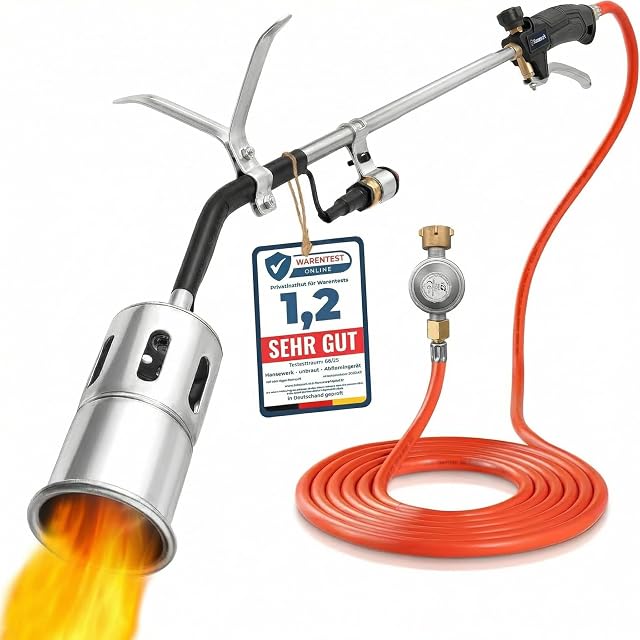
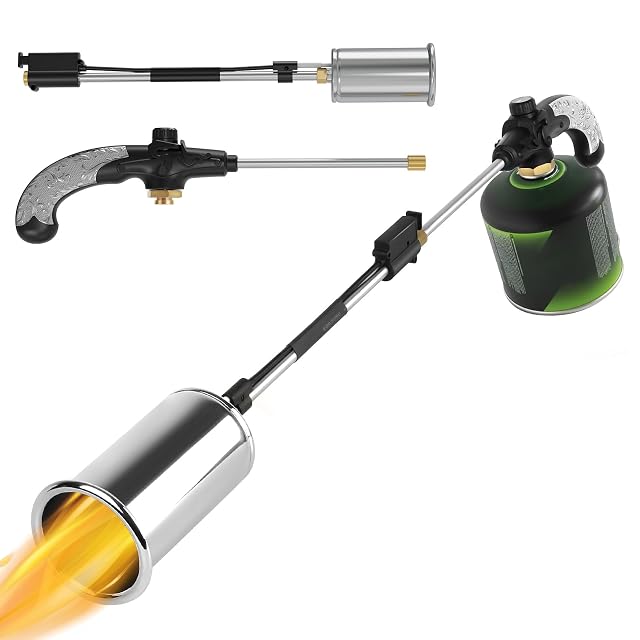
Three burners here run on a cartridge screwed to the tool. Three run on a hose to
a refillable cylinder.
A cartridge puts the fuel in your hand. The tool is self-contained, there is nothing
to trip over, and it goes in a shed as one object. It also weighs something, it runs for a
limited time, and non-refillable cartridges are the expensive way to buy gas.
A cylinder and hose puts the weight on the ground and gives hours of running at a
fraction of the cost per hour. It also means dragging a 5 m hose and a cylinder around a
drive, and buying a regulator.
At 1.6 kg and 97 cm, this is firmly the first kind, and the weight figure is what makes
the case.
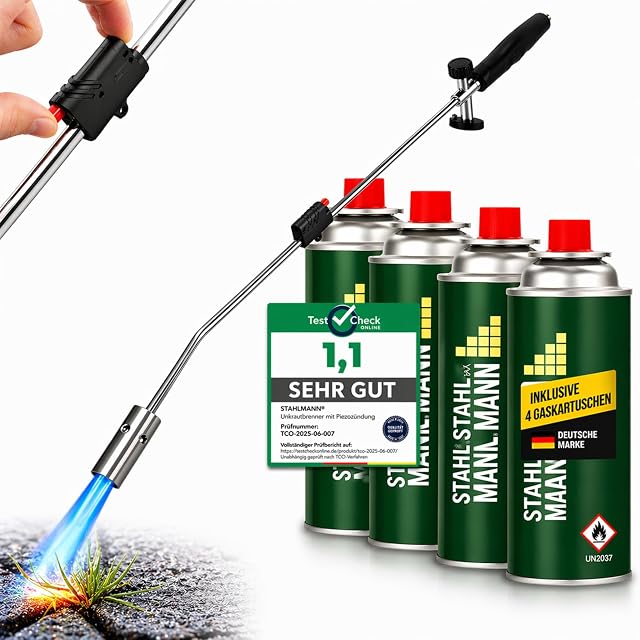
Piezo ignition in the handle
Named, and three of the six burners here have one.
It matters more than it sounds. The alternative is holding a lighter or a match to a
gas jet, outdoors, in wind, with the other hand holding a metre of steel tube — and doing
it again every time the flame blows out.
A piezo is a button. It also means the tool can be relit instantly mid-job, which is
what makes the two-to-three-second technique practical.
And the three seconds, which halves the running cost
No listing on this shelf prints it.
You do not burn the plant. Two to three seconds per weed, until the leaf darkens and
wilts, is the whole treatment — that colour change is the cells rupturing, and the plant
is already dead.
Charring it to ash takes ten times as long and ten times the gas, and adds nothing,
because the root was never going to be reached.
On a cartridge tool, where gas is bought in small expensive units, that is the single most
useful thing to know.
Ten years of spare parts
Stated, alongside German customer service and over 75 years of manufacturing.
On this tool that is a better promise than a warranty, and it is worth explaining why.
What fails on a gas burner is not the steel. It is the piezo — a crystal and a
spring mechanism, pressed thousands of times — and the seals at the cartridge
connection, and the valve that regulates the flame.
A warranty replaces a defective tool in the first years. Parts availability keeps a
working tool running in year eight, when a two-euro seal is the difference between a
functioning burner and a landfill item.
One competitor on this shelf offers a 36-month warranty instead. They are not the
same kind of commitment.
The secondary use, which is honest
“Besides weed control, the Thermoflamm Comfort can also be used as a practical gas burner
for lighting barbecue charcoal or firewood.”
True, useful, and modest — two other listings on this shelf claim asphalt softening, paint
stripping, snow melting, soldering and searing food.
What goes unpublished
No standards or certifications. Two burners on this shelf cite them: one names
three EN standards for the appliance plus EN 417 for its cartridges, and one names a
TÜV SÜD GS mark with a DVGW-certified regulator and hose.
On an open-flame appliance that is a real difference, and this page reports it without
inferring anything about compliance.
No burn time. One burner on this shelf publishes 1 to 3 hours per 227 g
cartridge, which is the figure that tells you what a session costs.
No cartridge type beyond “screw valve” — and screw-valve is not the same fitting as
the EN 417 one another burner here names, which is worth checking before assuming any
cartridge will fit.
And the safety, which this listing does not cover
One burner on this shelf publishes a full warning line, and it applies to all six:
Outdoors only. Keep clear of hedges, wood, mulch and dry grass. Do not work in
drought or wind. Let the tool cool before putting it away. Take the cartridge off. Store
below 50 °C and out of reach of children.
The one worth adding: a fire started in dry organic matter — bark mulch, a hedge base,
a dry hedge bottom, decking — can smoulder invisibly for an hour before it shows. Working
a joint against a timber fence or a mulched bed is where this goes wrong.
Availability
From 33 € to 40 €, that being the spread across the German, French, Italian and Spanish Amazon stores on the day of the survey.
Listed and unsold: the American and British Amazon catalogues hold the reference with nobody behind it.
Taken from Keepa on the day this page was last revised; stock and prices move without notice.
Prices quoted in this text were read on 26 September 2026. The live price is at the top of the page.