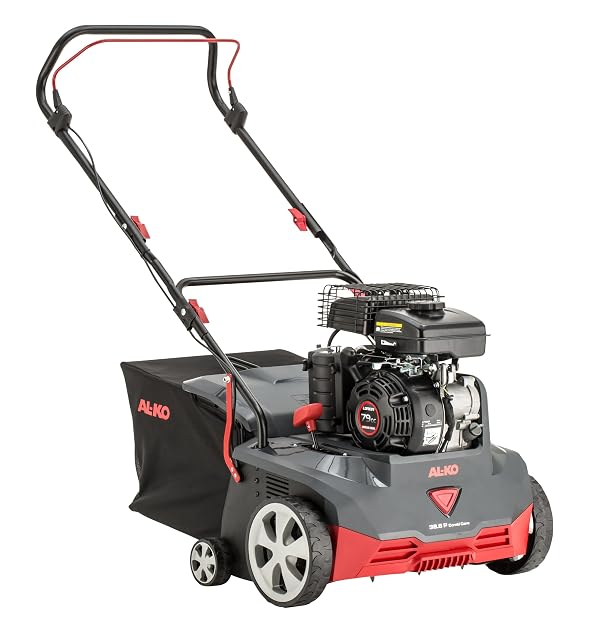
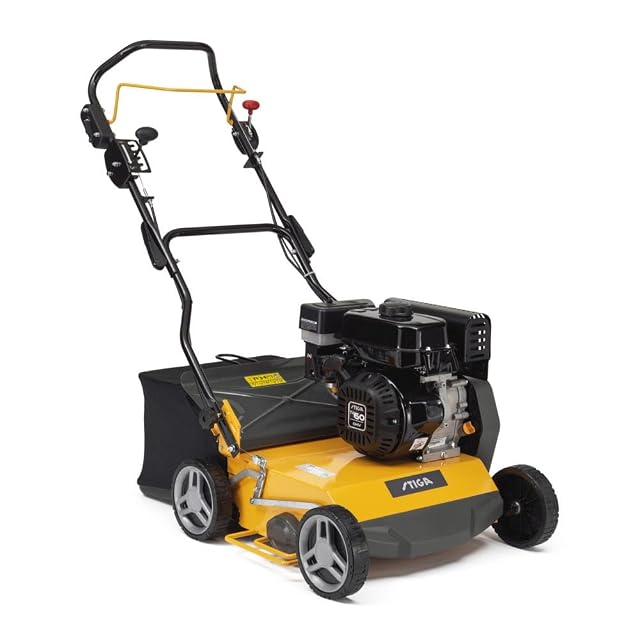
What a scarifier actually removes
Between the green grass you can see and the soil underneath it, there is a layer of dead
stems, old clippings, roots and moss — matted, springy, and increasingly waterproof as it
thickens.
That layer is thatch, and a thin one is normal and useful. A thick one is the reason a
lawn looks tired without any obvious problem: water runs off it rather than through it, seed
sown on top of it never reaches soil, and the grass roots into the thatch instead of into the
ground.
A scarifier drags steel blades through it and pulls it out.
Which makes depth the entire specification
Five of these six publish a depth range, and they run:
−12 to +6 mm, on two machines. −15 to +5 mm. −15 to 0 mm. Four depths, on
another. And one publishes an adjustable depth with no figures.
Read those properly, because the sign matters.
Positive is above the sward — the roller lifted clear, which is the transport and
aerating position.
Zero is just touching.
Negative is into the surface, and −12 or −15 mm is a long way in.
And the shallow end is where the work is
The single most common way a lawn is ruined is a scarifier set to its deepest setting on the
first pass.
At −12 mm the blades are not pulling thatch out. They are cutting into the soil, taking
the crowns of the grass plants with the dead material, and what comes off is not a bag of
thatch but a bag of lawn.
The method is boring and it works:
Set to zero. Take one pass. Look at what is in the bag.
Go down 3 mm. Take another pass at right angles to the first. Look again.
Stop when the bag fills with brown and not green. That is the depth for that lawn, that
year, and it will be shallower than you expect.
A domestic lawn scarified annually rarely needs more than a few millimetres. The deep settings
exist for a lawn that has not been touched in a decade, and that lawn needs reseeding
afterwards whatever happens.
The four machines that also aerate
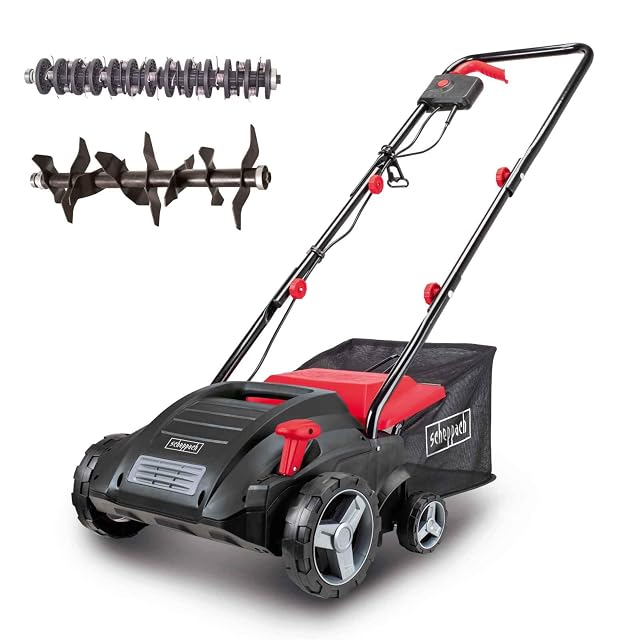
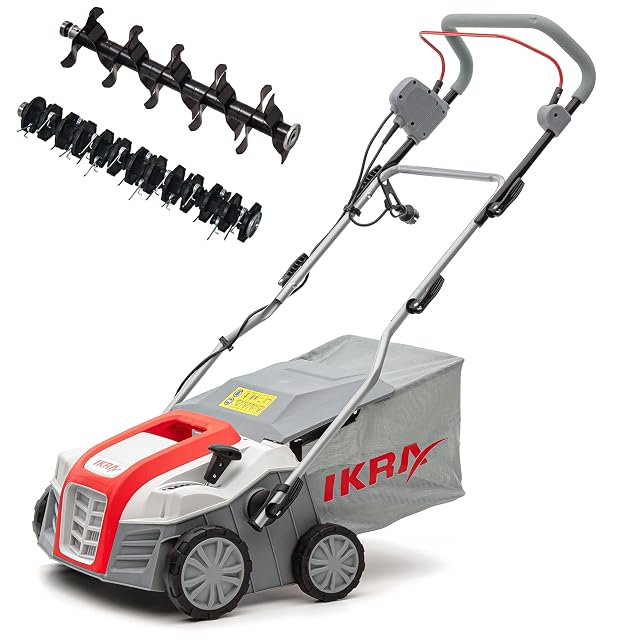
Four of these six carry two rollers: a scarifying roller with blades, and an
aerating roller with sprung steel tines.
Two publish the counts precisely — 20 blades and 24 tines, on both — and two publish
blades only.
The distinction between them is real:
Blades cut. They slice vertically through the thatch layer and lift it.
Tines comb. They drag through the surface and pull loose material out without cutting into
the sward.
For an annual tidy on a lawn in reasonable condition, the tine roller is often the right
choice and almost nobody uses it — because on two of these machines the roller change is the
thing that decides it. One publishes a tool-free change; the other says the rollers are
easily interchangeable. A roller swap that needs a spanner happens once.
The order the rest of the work has to happen in
Scarifying is step three of five, and doing it out of order wastes it.
One: mow, short. Lower than usual, and collect. A scarifier cannot reach the thatch
through long grass, and long grass wraps the roller.
Two: kill the moss, if there is moss. Moss in a thatch layer comes out with it — and moss
treated with iron and then scarified two weeks later comes out far more completely. This site’s
moss shelf covers the products and the one caution that matters: iron stains paving
permanently.
Three: scarify. Shallow, twice, at right angles, collecting everything.
Four: overseed. This is the step people skip and it is the one that makes the difference.
Scarifying leaves bare soil, and bare soil in a lawn is where the next weed germinates. It
is also the only condition in which grass seed works — seed that lands on existing turf never
reaches ground. The seed shelf on this site publishes rates of 20 to 30 g/m², and a scarified
lawn is the one day of the year when overseeding actually takes.
Five: feed, and do not let it dry out. Germinating seed must not dry out once. Two weeks of
attention after scarifying is worth more than the scarifying was.
Weight.
Not one of these six states it, and on a machine that has to be pushed into a lawn while
resisting the drag of blades in soil, it is the figure that decides how hard the job is.
Two of them are petrol, at 182 and 212 cc; one is petrol at 79 cc; two are 2000 W
mains; one is cordless and supplied as a bare tool. Every one of those is a different amount of
machine to push, and none of them says how much.