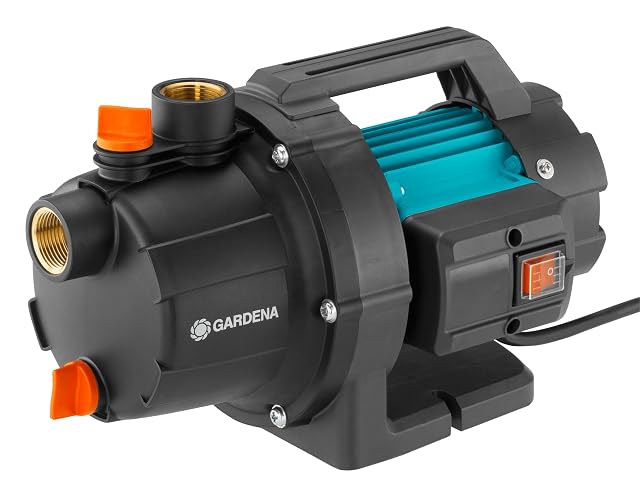
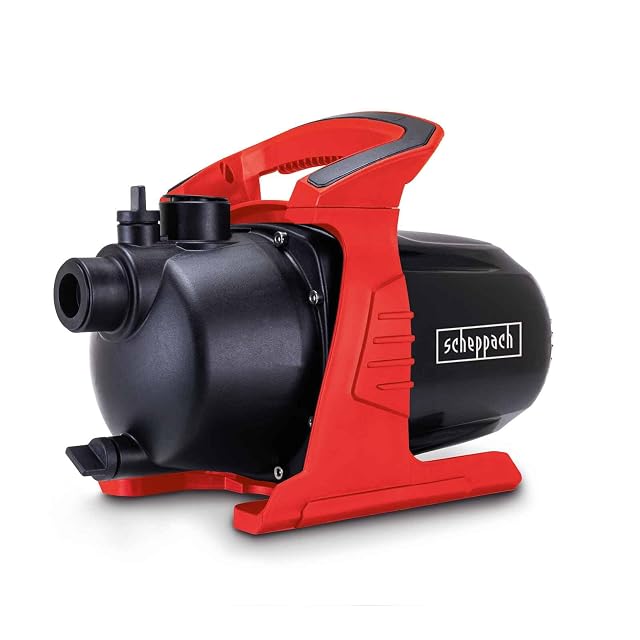
The number that is not the specification
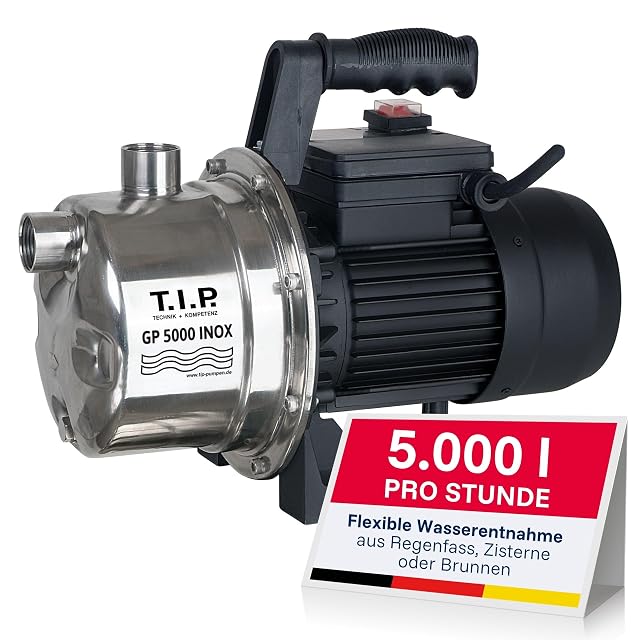
Every pump on this shelf leads with litres per hour. Across these six: 5 000, 5 000,
5 200, 4 500, 3 300 and 3 000.
And every one of those figures is measured at zero head — with the water going nowhere
uphill and nothing resisting it.
No garden presents that condition. Water has to come up out of a well or a tank, along a hose,
and out of a nozzle or a sprinkler, and every metre of that costs.
So the headline figure is a laboratory maximum. The two figures that decide whether a pump
works are underneath it.
Suction height, which is a hard physical limit
Across these six: 9 m, 8 m, 8 m, 7 m, and two that do not publish one.
This is the figure to check before anything else, and it is worth understanding why it is not
negotiable.
A pump does not pull water up. It cannot. What it does is create a low-pressure space, and
the atmosphere pushes water into it from below.
Which means the ceiling is set by atmospheric pressure, not by the motor: about 10 metres
at sea level, in theory, and 7 to 9 in practice once pipe friction and the pump’s own
efficiency are accounted for.
A water surface one metre deeper than the stated figure is a pump that will not prime, and
no amount of power changes that. The answer for a deep well is a submersible pump, which
pushes from below rather than sucking from above — a different product entirely.
Measure from the pump to the water surface at its lowest in August, not to the top of
the well.
Across these six: 50 m, 48 m, 45 m — published as 4.5 bar as well — 43 m at
4.3 bar, 35 m at 3.5 bar, and 3.5 bar on the last.
Head is how far the pump will push water upward once it is moving, and it converts directly
into pressure: roughly 10 metres of head to 1 bar.
Which is why the listings that publish bar as well as metres are the more useful ones. A
sprinkler is specified in bar, and this site’s sprinkler shelf shows what that means: one
product there publishes its coverage at 2.8 bar and again at 4.1 bar, and the diameter
nearly doubles between them.
So a pump at 3.5 bar and a pump at 5 bar are not slightly different. They are the difference
between a sprinkler covering a small circle and covering a large one.
And they do not happen together
This is the part no listing on this shelf explains.
Maximum flow is at zero head. Maximum head is at zero flow.
A pump rated 5 000 l/h and 50 m delivers neither in use. It delivers some pair of values on the
curve between them, and the curve is what a pump actually is.
Nothing on this shelf publishes one. So the practical reading is: halve the flow figure in
your head for any real installation, and treat the head figure as the ceiling above which
nothing comes out at all.
One listing here is unusually concrete instead: it states that the pump will run one to three
sprinklers. That is the most useful sentence in this family, because it is an answer rather
than an input.
The pressure vessel, and why the size is not cosmetic
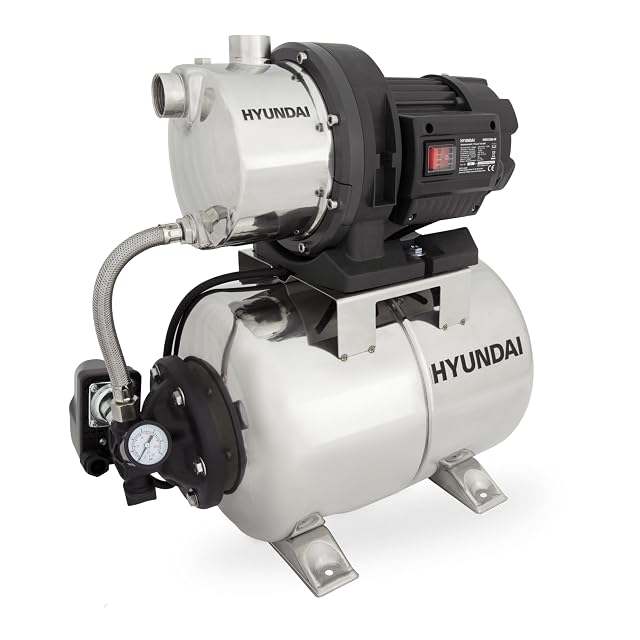
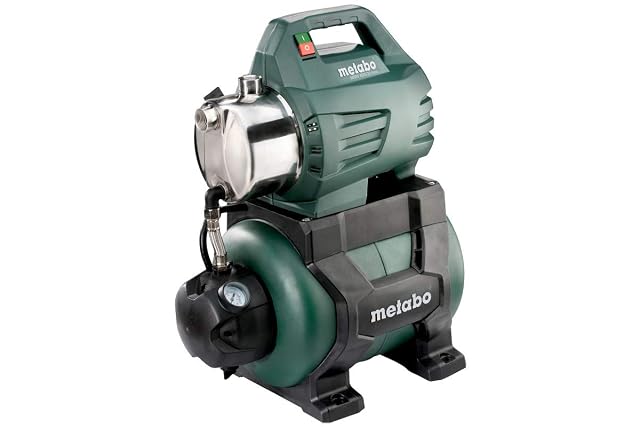
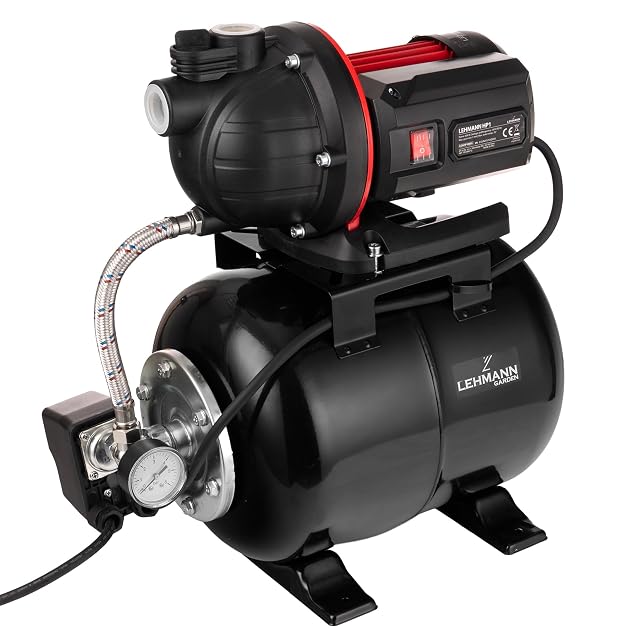
Three of these publish one: 24 L, 19 L stainless, and 19 L steel.
A booster pump with a vessel does not start every time a tap opens. The vessel holds a few
litres under pressure, and a small draw — a watering can, a short rinse — comes out of the tank
while the motor stays off.
That matters because of wear. An electric motor’s hard moment is starting, and a pump that
starts and stops forty times while somebody fills four cans is doing forty hard moments. A
larger vessel means fewer.
Stainless matters too, and two of these say so. A painted steel vessel rusts from the
inside, where nobody looks, and rust flakes end up in the diaphragm and in the sprinkler
nozzles.
The materials, which decide the fifth year
Across these six: stainless pump housing on four, a stainless shaft with brass threads
on one, and Noryl hydraulics on another.
The two that matter:
Brass threads rather than plastic ones at the ports. A pump is connected and disconnected
every spring and autumn, with a spanner, and plastic threads round off and then will not seal.
A stainless shaft. The shaft runs through the seal between the motor and the water, and it
is the part that corrodes and then destroys the seal. One listing names it specifically.
And the two figures nobody publishes
Connections. Two of these six publish a port size — R1 inch male at 33.3 mm and G1
inch — and one publishes a 1 inch female thread. Three publish nothing, and the port
thread is what decides whether a pump connects to a hose you own without a trip for adapters.
Weight. Not one of them states it, and a pump is carried to a well, lifted onto a stand and
brought in for the winter — which is the one job nobody plans for and which decides where the
pump can live.