The way this shelf is usually presented — blowers on one side, sweepers on the other, pick one
— gets the question wrong.
They do not do the same job badly and well. They do different jobs, and the dividing line is
surface and weather.
What a sweeper does, and cannot do
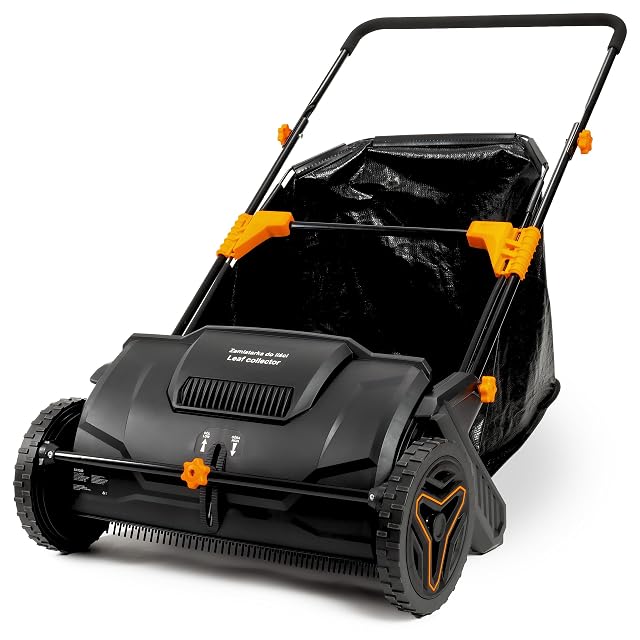
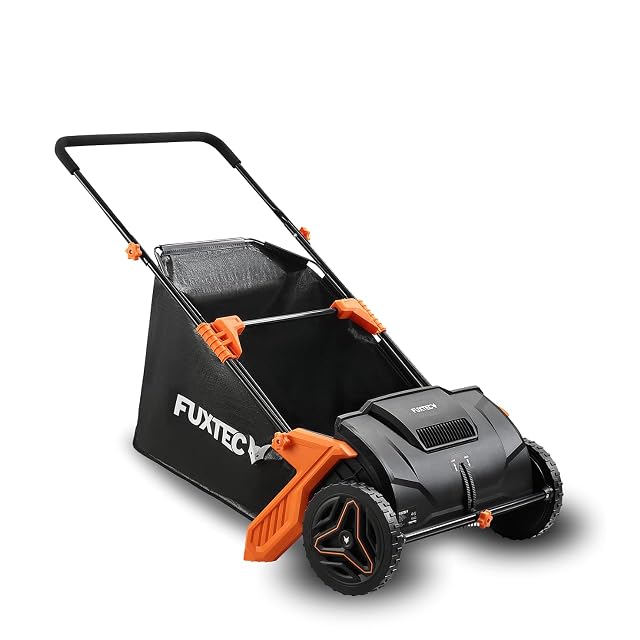
A push or towed sweeper has rotating brushes driven from the wheels, and a bag behind them.
It sweeps leaves off grass and throws them into the bag in one pass.
What that buys:
It collects. The outcome is a bag, not a pile — and a pile is a second job.
Wind does not matter. The leaves go from the ground into the bag with nowhere to escape to.
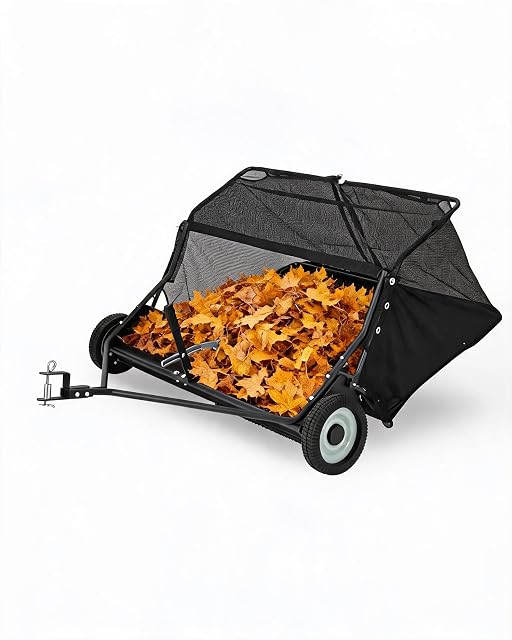
It is silent, and it needs no power. Two of the three sweepers here are manual; the third
is towed behind a machine.
It is fast on open grass. A 53 cm brush walked across a lawn clears at walking pace.
What it cannot do:
Wet leaves stuck to paving. Brushes skim over them.
Gravel. Brushes throw the gravel into the bag with the leaves.
Borders, steps, corners, under shrubs. A sweeper is a wheeled machine and it goes where a
wheeled machine goes.
What a blower does, and cannot do
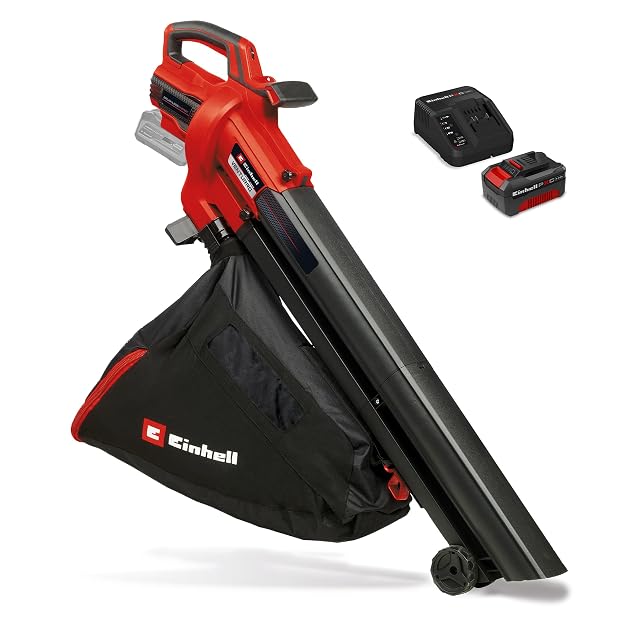
A blower moves air. The three here publish 210 km/h on a cordless, and 335 and
404 km/h on two 3000 W mains machines.
What that buys:
It reaches everywhere. Gravel, borders, steps, under a hedge, the gap between a shed and a
fence, wet leaves stuck to a patio — a jet of air at 400 km/h lifts what a brush skates over.
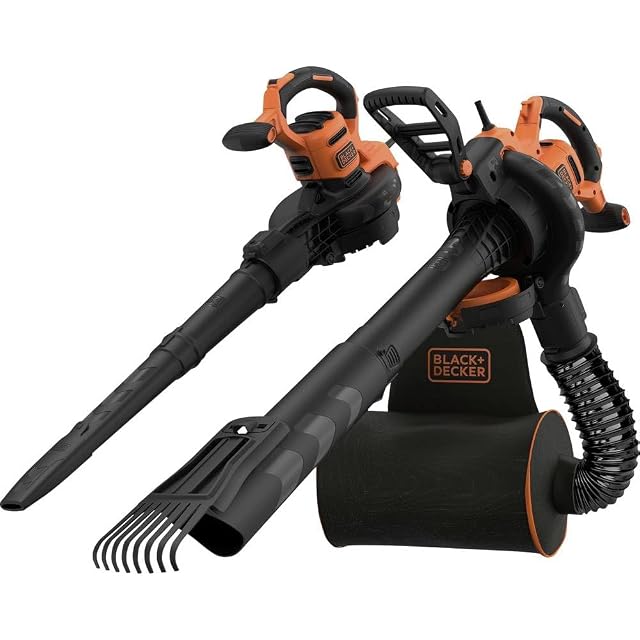
It vacuums and shreds. All three of these have a vacuum mode, and two publish a shredding
ratio: 10:1 and 16:1. Sixteen bags of leaves become one.
What it cannot do:
Work in wind. This is the whole limitation and it is not marginal. A blower builds a pile;
a breeze unbuilds it.
Collect on its own. Blowing is half a job. The pile still has to be picked up, which is
either a rake and a sheet or the vacuum mode — and vacuuming is far slower than blowing.
Two of these publish air volume, and they publish it in different units:
600 m³/h on one. 15 m³/min on the other.
Those look incomparable and they are not: 15 cubic metres a minute is 900 cubic metres an
hour. Converted, the second machine moves half again as much air as the first.
That conversion matters because volume and speed do different jobs:
Speed — km/h — unsticks a single wet leaf from paving.
Volume — m³/h — moves a drift of dry ones across a lawn.
All three blowers here publish a speed; two publish a volume, in two units.
The shredding ratio, which is the real argument for a vacuum
10:1 on the cordless. 16:1 on both mains machines.
That is the figure that turns leaf clearing from a disposal problem into a gardening input.
A bag of whole leaves is mostly air, takes two years to rot, and blows away. A bag of
shredded leaves is a sixteenth of the volume, rots in a single winter, and stays where it
is put — and leafmould is the best free soil conditioner there is.
One of them publishes what the impeller is made of: metal. That is worth noting, because an
impeller shreds by striking, and it strikes the twigs and small stones that come up with the
leaves. A plastic impeller wears its edges round within a season and the ratio quietly stops
being true.
The bag volumes, in the right order
566 L on the towed sweeper. 100 L on the push sweeper. About 100 L on the third.
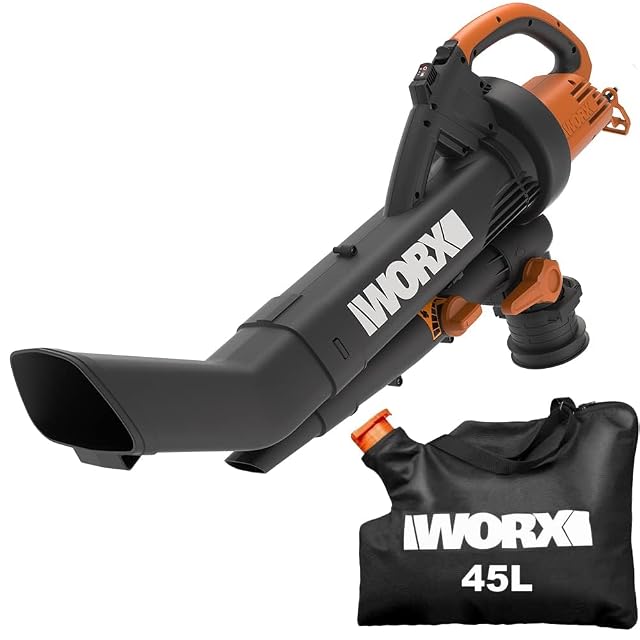
72 L on one blower, 45 L on the other two.
Those figures are not comparable in the way they look, because the blowers’ bags hold
shredded leaves at up to sixteen to one. A 45 litre blower bag holds the equivalent of
several hundred litres of whole leaves.
What it does not change is how often you stop. A 45 litre bag on a shoulder strap, on a lawn
under a mature lime, is emptied continuously. One of the blowers here answers that with a
72 litre backpack bag and a quick release, which is the right shape for a long session.
The one thing to do before either of them
Leave some.
A lawn with a thin scatter of leaves on it is fine; a lawn under a solid mat of them for six
weeks is a lawn with dead patches and moss in the spring, because the grass has had no light.
So the job is real and it has a threshold. Clear the lawn when it is covered. Under a hedge, in
a border and at the back of a bed, leaves left in place rot down into exactly the material the
soil wants — and this site’s lawn soil shelf sells the bagged version of it.