A slope re-sorts the specifications
On a flat lawn, weight is a durability and storage question, drive is a convenience, and the
interesting figures are the deck width and the cutting height.
On a slope the list inverts.
Weight becomes the load you are moving uphill, and the force that wants to take a machine
downhill without you.
Drive becomes the difference between the far end being cut and not.
And for a robot, one published percentage decides whether the purchase works at all.
The four published slope limits
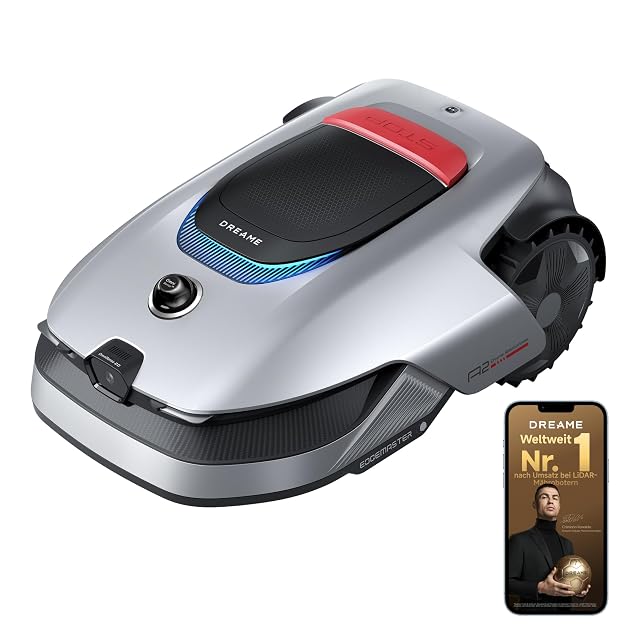
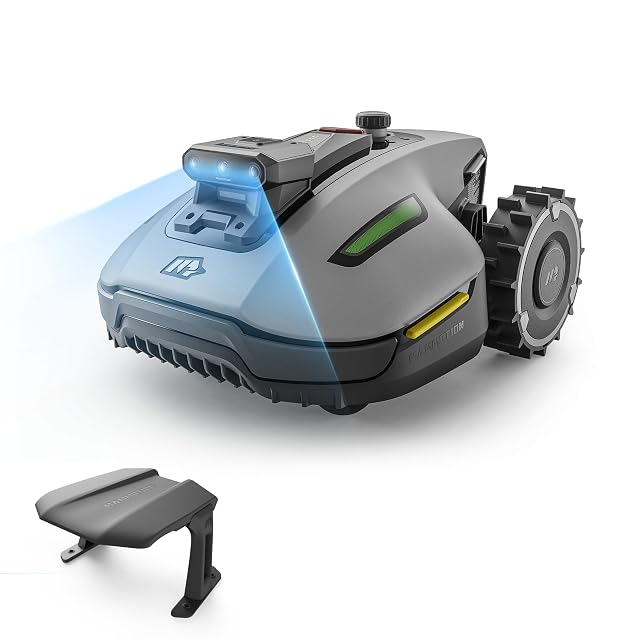
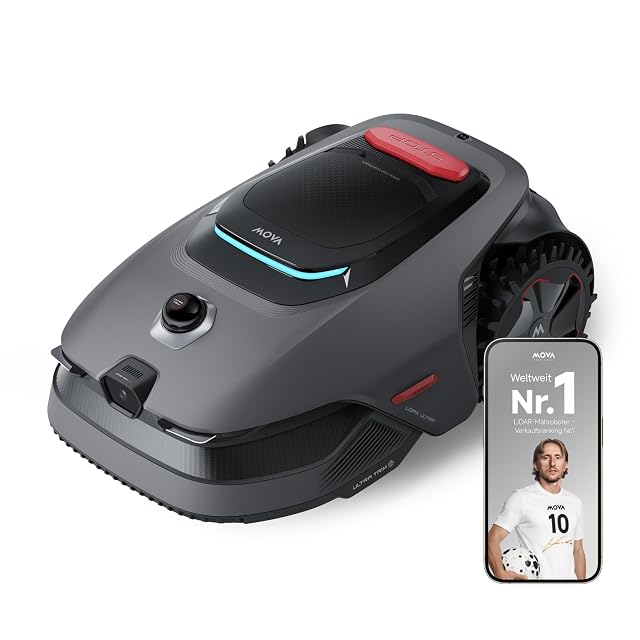
50 per cent on one. 45 per cent on three.
Fifty per cent is a gradient of one in two — about 26 degrees. Forty-five is about 24.
That is a bank you can walk up without using your hands and would not carry a full watering can
down. It is steeper than most garden slopes and it is not steeper than all of them.
Measure the steepest section, not the average. The commonest shape of a sloping garden is a
lawn that falls gently for most of its length and then drops the last two metres onto a patio or
a wall — and that last two metres is the part a robot fails on, while the average gradient looks
comfortable.
A robot on a slope past its rating does not simply cut less well.
The wheels spin. Traction fails, the mower stops climbing, and it sits there.
It beaches sideways. A mower traversing a slope steeper than it is designed for slides down
the fall line and ends up across it, where it has less grip again.
It wears a patch. A robot that keeps trying the same approach grinds the same piece of turf
until it is bare, at the bottom of the bank, which is also where the water collects.
And it stops navigating. Every robot on this page positions itself continuously, and wheel
slip corrupts that. A machine that thinks it has travelled three metres and has travelled one is
a machine that maps the garden wrong.
One of these also publishes the related figure: 3 cm of obstacle clearance. On a slope that
matters twice over, because a lawn edge crossed uphill is a higher step than the same edge
crossed on the flat.
What a robot on a slope buys beyond the cutting
It is worth stating because it is the strongest argument on this page.
You do not walk the slope. Not once a week for seven months.
A sloping lawn is the single most unpleasant mowing job in a domestic garden, and it is where
most accidents with mowers happen: a heavy machine, wet grass, a downhill gradient and arms that
have been working for twenty minutes.
A machine that goes up and down it on its own removes the job rather than making it easier, and
all four robots here publish a slope figure to be held to.
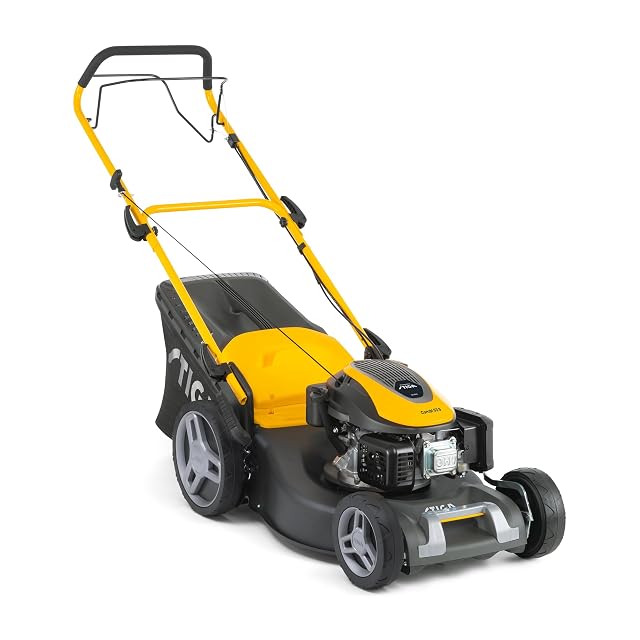
The two petrol mowers, and why they are on this page
If a robot is not the answer — too much lawn, too little budget, too many obstacles — then the
requirement changes to drive.
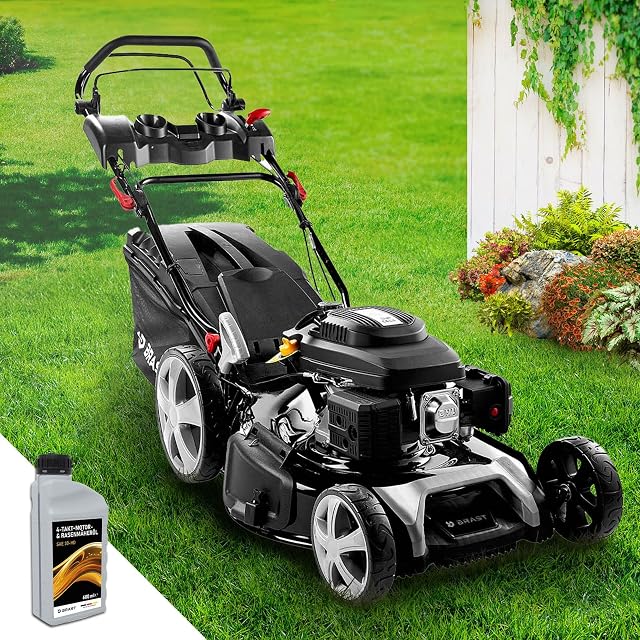
Both petrol picks here are rear-wheel drive, and one publishes the two figures that go with
it: 35.1 kg, and a named transmission maker.
Thirty-five kilograms is why drive matters. On the flat it is invisible. Up a 20 per cent
bank it is the whole task, and the arms doing it are also the arms steering a machine with a
spinning blade under it.
A named gearbox is why it keeps mattering. A self-propelled drive is the part of a petrol
mower that fails, and a transmission from a named maker is a repairable one rather than an
anonymous assembly.
The other publishes its speed — 3.7 km/h — which is the figure that tells you whether the
drive walks at your pace or drags you.
And one row every one of these six leaves blank
Guaranteed sound power.
Not one of the six publishes a decibel figure, and neither does any petrol mower this site has
surveyed.
It is worth naming here because a sloping garden is usually a terraced one, which means the
neighbours are above or below you at close range — and two robots on this site’s shelf publish
figures under 55 dB and 58 dB while the petrol machines publish nothing at all.
The rule for the machine you push
Mow across a slope, never up and down.
Three reasons and all of them matter more than the tidiness of the stripes:
The machine cannot run away. Pointed across the fall line, gravity is not pulling it in the
direction it travels.
It cannot come back at you. A pushed mower that slips while pointed uphill comes downhill,
and you are what is downhill of it.
Your footing is better. Walking across a slope is stable; walking backwards down one while
pulling 35 kilograms is not.
And the condition that overrides all of it: not on wet grass. A slope that is manageable dry
is a different surface an hour after rain, and the machine is the least of what slides.
The one thing to do to the slope itself
Cut it higher than the rest of the lawn.
A slope dries faster than flat ground — water runs off it rather than in — so grass on a bank is
under more drought stress than grass ten metres away. Longer grass has more leaf, deeper roots
and better drought tolerance, and a bank cut at 50 mm survives an August that a bank cut at 25
does not.
Which is also the setting that reduces how often it has to be cut, on the part of the lawn
nobody wants to visit.